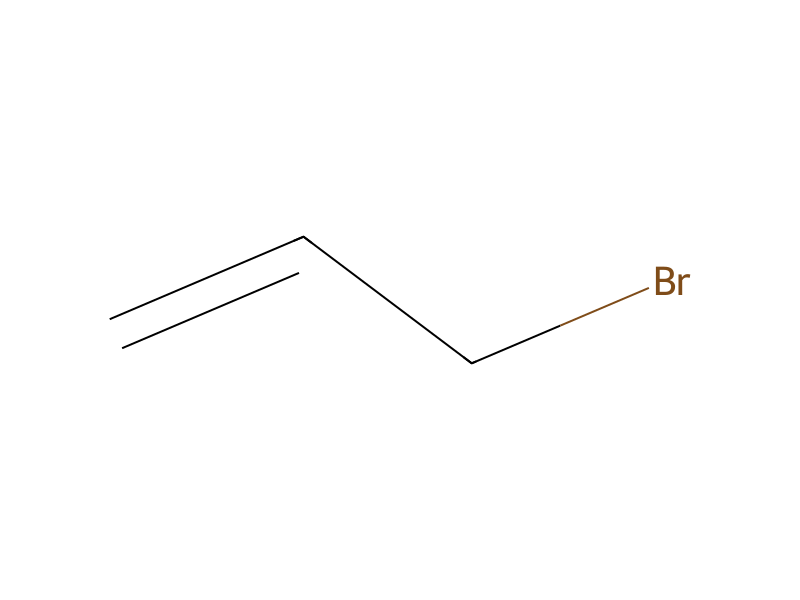
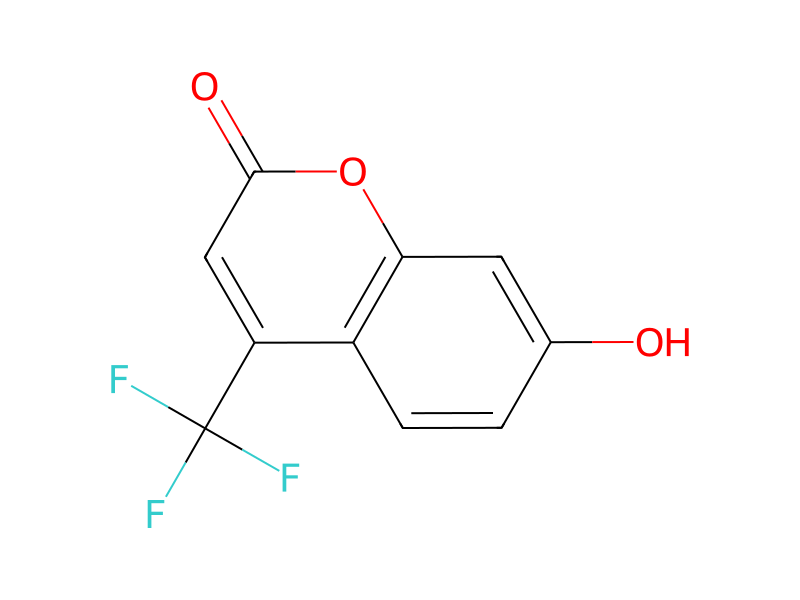
To a solution of 4-trifluoromethyl-7-hydroxycoumarin (5.0 grams, 22.0 mmol) and potassium carbonate(3.6 grams, 26.0 mmol) in DMF (20.0 mL) at 40° C., was added 3-bromoprop-1-ene (2.0 mL, 23.0 mmol). This mixture was stirred 18 hours and then diluted with ethyl acetate. The organic phase was washed with 1M hydrochloric acid solution and brine. The organic was then dried over sodium sulfate and the solvent removed to give a tan solid. This was filtered through a pad of silica gel using 20% ethylacetate in hexane. This material was then dissolved in 1,2-dichlorobenzene (150 mL) and refluxed for 18 hours. The solvent was removed in vacuo to give a tan solid. This material was dissolved in methanol (150 mL) with 10% palladium on carbon (300.0 mg) under a hydrogen atmosphere (1 Atm) for 2 hours. The mixture was then filtered through a celite pad and the solvent removed in vacuo to give tan solid. This was chromatographed on silica gel using 20% ethyl acetate in hexane to give the titled compound.