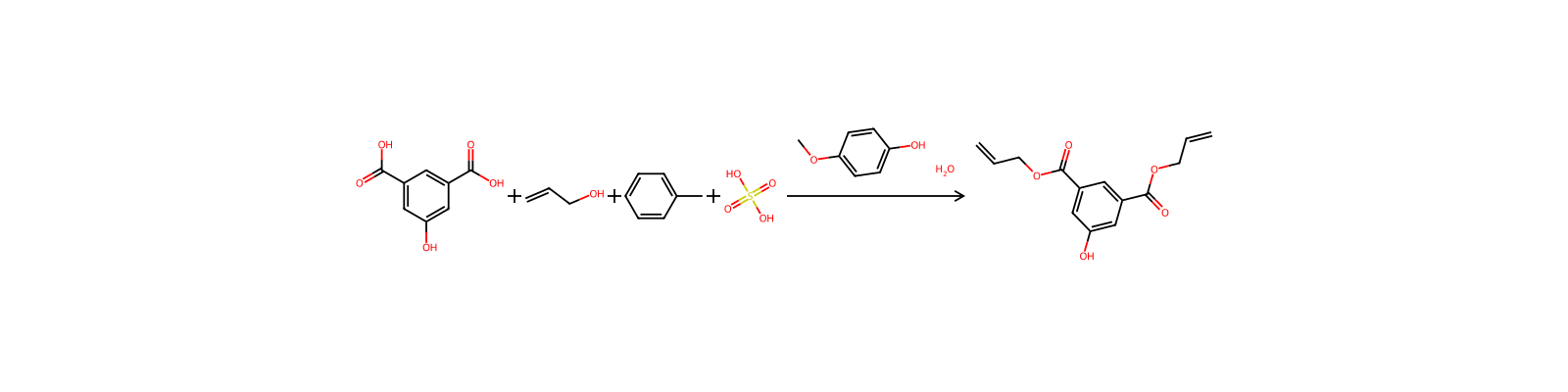
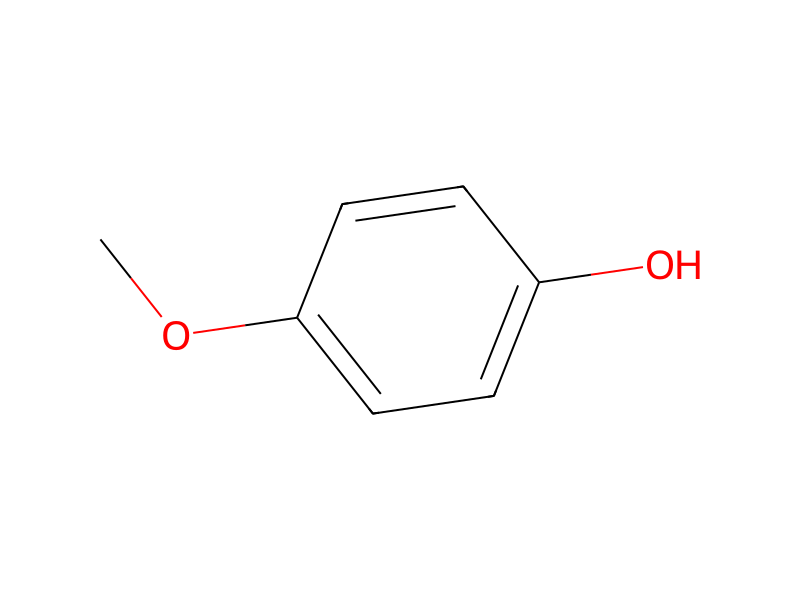
[OH:1][C:2]1[CH:3]=[C:4]([C:11]([OH:13])=[O:12])[CH:5]=[C:6]([CH:10]=1)[C:7]([OH:9])=[O:8].[CH2:14](O)[CH:15]=[CH2:16].[C:18]1(C)[CH:23]=CC=C[CH:19]=1.S(=O)(=O)(O)O>COC1C=CC(O)=CC=1.O>[OH:1][C:2]1[CH:3]=[C:4]([C:11]([O:13][CH2:23][CH:18]=[CH2:19])=[O:12])[CH:5]=[C:6]([CH:10]=1)[C:7]([O:9][CH2:14][CH:15]=[CH2:16])=[O:8]Into a reaction vessel equipped with a stirrer, condenser and thermometer was placed 0.2 mole of 5-hydroxyisophthalic acid. Thereto were added 0.6 mole of allyl alcohol, 300 ml of toluene, 1.3 g of sulfuric acid and 0.2 g of p-methoxyphenol and the mixture was refluxed with heating. A mixture of toluene and water was distilled off and cooled with a condenser, and toluene was separated from water and returned contineously to the reaction vessel. The mixture was heated for 8 hours and then allowed to cool. At this point, total of distilled water was 7 ml. After the reaction mixture was washed with a saturated aqueous solution of sodium chloride until the aqueous layer did not indicate acidic, toluene was distilled at a reduced pressure. The resulting concentrate was distilled at a reduced pressure to obtain 27 g (yield 52%) of diallyl 5-hydroxyisophthalate. b.p. 202°~205° C./5 mm Hg.