Reaktionsgleichung

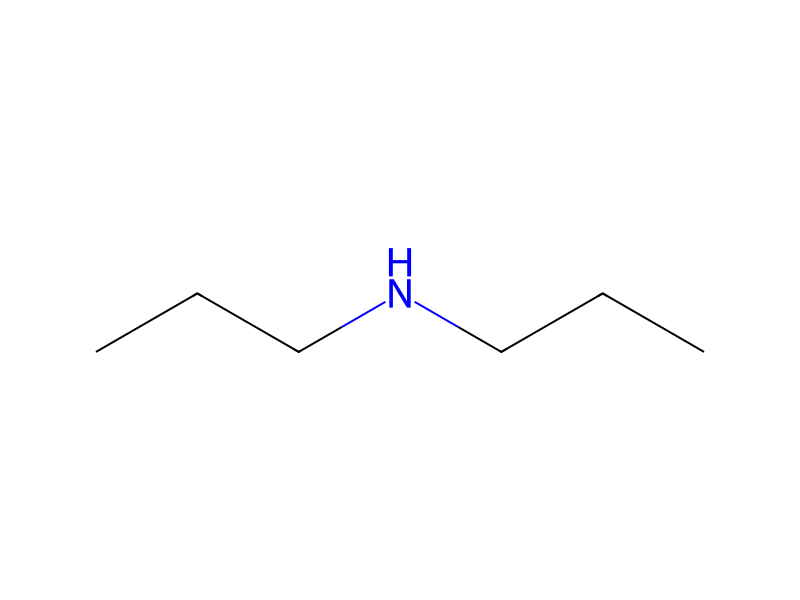
[Cl:1][C:2]1[CH:3]=[C:4]([CH:7]=[C:8]([CH3:10])[N:9]=1)[C:5]#[N:6].[CH2:11]([NH:14][CH2:15][CH2:16][CH3:17])[CH2:12][CH3:13]>>[Cl:1][C:2]1[CH:3]=[C:4]([CH:7]=[C:8]([CH3:10])[N:9]=1)[C:5]#[N:6].[CH2:11]([N:14]([CH2:15][CH2:16][CH3:17])[C:2]1[CH:3]=[C:4]([CH:7]=[C:8]([CH3:10])[N:9]=1)[C:5]#[N:6])[CH2:12][CH3:13]Komponenten


Reaktionsbedingungen
- Temperatur
- 80 °C
Versuchsvorschrift
To 2-chloro-6-methylisonicotinonitrile (0.230 g, 1.51 mmol) was added di-n-propylamine (5 mL). The mixture was heated at 80° C. in a sealed, thick-walled glass vessel for 12 h and then at room temperature for 17 h. Excess di-n-propylamine was removed under reduced pressure and the residue was partitioned between dichloromethane and aq. sodium bicarbonate. After drying over sodium sulfate and concentration, the residue was chromatographed on silica gel using ethyl acetate-hexane (10/90) to give 0.14 g of 2-chloro-6-methylisonicotinonitrile and 0.059 g of 2-(dipropylamino)-6-methylisonicotinonitrile. Using the above conditions, 2-chloro-6-methylisonicotinonitrile (0.14 g) was converted to an additional 0.043 g of 2-(dipropylamino)-6-methylisonicotinonitrile.
Aufarbeitung
- customExcess di-n-propylamine was removed under reduced pressure
- customthe residue was partitioned between dichloromethane and aq. sodium bicarbonate
- dry with materialAfter drying over sodium sulfate and concentration
- customthe residue was chromatographed on silica gel
Quellen und Nachweise
- ORD-Eintrag
- ord-3d9301bff211417b9038a604211b92d1
- Quelldatensatz
- uspto-grants-2007_02
- Patentnummer
- US07176242B2
Verknüpfte Notizen
Wird geladen…