Reaktionsgleichung

[Cl:1][C:2]1[CH:3]=[C:4]([OH:9])[CH:5]=[CH:6][C:7]=1[Cl:8].[CH2:10](Br)[CH:11]=[CH2:12].C(=O)([O-])[O-].[K+].[K+].[I-].[K+]>C(C(C)=O)C>[CH2:12]([C:3]1[C:2]([Cl:1])=[C:7]([Cl:8])[CH:6]=[CH:5][C:4]=1[OH:9])[CH:11]=[CH2:10]Komponenten
6
Edukt 4


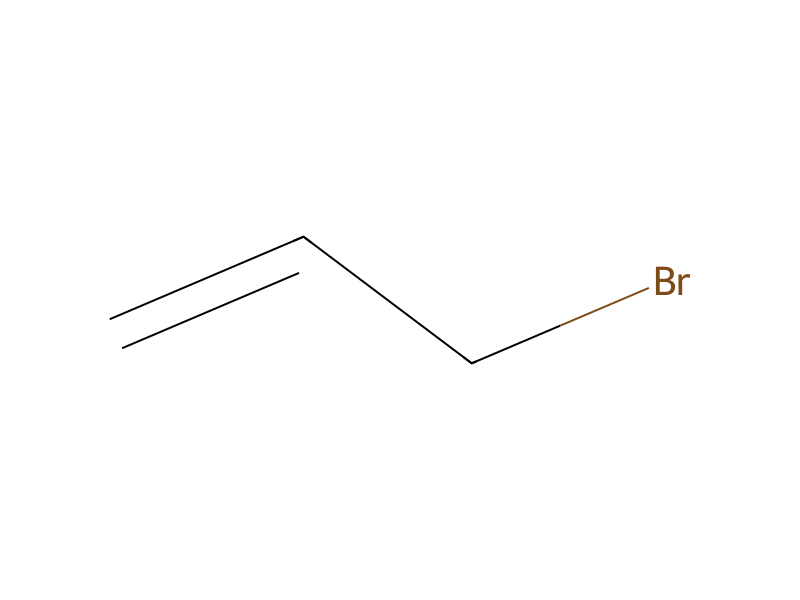

Produkt 1

Reagenzien, Katalysatoren, Lösungsmittel 1

Reaktionsbedingungen
- Temperatur
- 200 °C
Versuchsvorschrift
A solution of 100 g. of 3,4-dichlorophenol, 50 ml. of allyl bromide, 84 g. of potassium carbonate, and 1.0 g. of potassium iodide in 500 ml. of methyl ethyl ketone was allowed to reflux overnight. The solution was then cooled, filtered, and evaporated to dryness. The residue was then heated at 200° C. for approximately four hours. NMR analysis indicated that the 113.6 g. of remaining material was primarily the desired 2-allyl-3,4-dichlorophenol.
Aufarbeitung
- temperatureto reflux overnight
- temperatureThe solution was then cooled
- filtrationfiltered
- customevaporated to dryness
Quellen und Nachweise
- ORD-Eintrag
- ord-99355c9dac3a4ade8fb9d00ba4a791bd
- Quelldatensatz
- uspto-grants-1988_08
- Patentnummer
- US04764521
Verknüpfte Notizen
Wird geladen…