StartseiteMCPWorkbenchSkills
StartseiteWorkbenchBenachrichtigungenMein Bereich
llms.txt · MCP-AnleitungDatenschutz · Nutzungsbedingungen · Supportv1.8.0
  1. Startseite
  2. /Reaktion

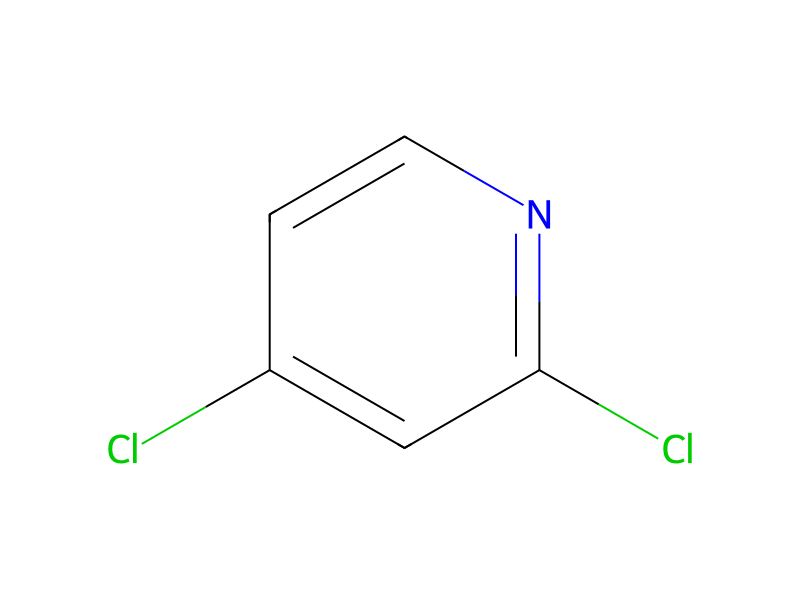
2,4-Dichloropyridine → Ethyl 2-[(4-chloro-2-pyridinyl)amino]-1,3-oxazole-5-carboxylate

HRID 352
Notizen
Druckvorschau

Reaktionsgleichung

Reaktionsgleichung von HRID 352
CCOC(=O)c1cnc(N)o1.Clc1ccnc(Cl)c1>C1COCCO1.COc1ccc(OC)c(P(C(C)(C)C)C(C)(C)C)c1-c1c(C(C)C)cc(C(C)C)cc1C(C)C.O=C(/C=C/c1ccccc1)/C=C/c1ccccc1.O=C(/C=C/c1ccccc1)/C=C/c1ccccc1.O=C(/C=C/c1ccccc1)/C=C/c1ccccc1.O=C([O-])[O-].[Cs+].[Cs+].[Pd].[Pd]>CCOC(=O)c1cnc(Nc2cc(Cl)ccn2)o1
KomponentenReaktionsbedingungenVersuchsvorschriftQuellen und NachweiseNotizen zur Reaktion

Komponenten

7

Edukt 2

HCID 335152,4-DichloropyridineHCID 5260193Ethyl 2-amino-1,3-oxazole-5-carboxylate

Produkt 1

HCID 101584499Ethyl 2-[(4-chloro-2-pyridinyl)amino]-1,3-oxazole-5-carboxylateAusbeute 0 %

Reagenzien, Katalysatoren, Lösungsmittel 4

HCID 10796Cesium carbonateReagenzHCID 9811564
Bis(dibenzylideneacetone)palladium
Katalysator
HCID 44233348Di-tert-butyl(2',4',6'-triisopropyl-3,6-dimethoxy-(1,1'-biphenyl)-2-yl)phosphineKatalysator
HCID 312751,4-DioxaneLösungsmittel

Reaktionsbedingungen

Temperatur
160 °C

Versuchsvorschrift

Objective: Series of experiments to optimise yield of the above coupled product. Pd2(dba)3 (22.89 mg, 0.025 mmol), di-tert- butyl(2',4',6'-triisopropyl-3,6-dimethoxybiphenyl-2-yl)phosphine (48.4 mg, 0.10 mmol), 2,4-dichloropyridine (148 mg, 1.00 mmol), cesium carbonate (651 mg, 2.00 mmol),ethyl 2-aminooxazole-5-carboxylate (156 mg, 1.00 mmol) and 4,4'-di-tert-butylbiphenyl (60 mg, 0.23 mmol) were added to an oven dried microwave vial, the vial was capped and placed under an inert atmosphere, dioxane (4 mL) was added and the resulting mixture was heated at 160 °C for 1 h by microwave irradiation under a nitrogen atmosphere. Crude LCMS shows a switch in regioselectivity, with the other isomer becoming the major product in 25% yield based on internal standard (note: this is a rough estimate as the U.V absorbance may be significantly different to the other regioisomer). The regioisomeric ratio is 1.7:1 and although the product was not formed in synthetically useful yields, it is an interesting result. Conclusion: Switch in regioselectivty with the change in ligand may be worth pursuing, although greater selectivity was seen for this prduct in the preceeding reaction.

Quellen und Nachweise

ORD-Eintrag
ord-81c9dfb0f9224007985242064ea9e33c
Quelldatensatz
750 AstraZeneca ELN dataset
Originallink
Quelle ansehen

Notizen zur Reaktion

Wird geladen…

Auf dieser SeiteKomponentenReaktionsbedingungenVersuchsvorschriftQuellen und NachweiseNotizen zur Reaktion


