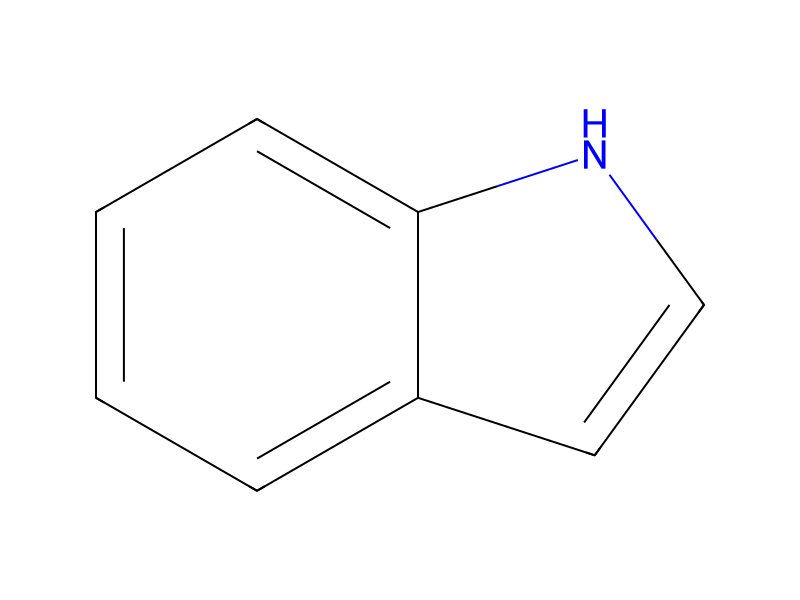
[NH:1]1[C:9]2[C:4](=[CH:5][CH:6]=[CH:7][CH:8]=2)[CH:3]=[CH:2]1.[H-].[Na+].[CH3:12][C:13]1[CH:20]=[C:19]([CH3:21])[CH:18]=[C:17]([CH3:22])[C:14]=1[CH2:15]Cl.O>CS(C)=O>[CH3:12][C:13]1[CH:20]=[C:19]([CH3:21])[CH:18]=[C:17]([CH3:22])[C:14]=1[CH2:15][N:1]1[C:9]2[C:4](=[CH:5][CH:6]=[CH:7][CH:8]=2)[CH:3]=[CH:2]1A solution of indole (1.185 g) in dry DMSO (3 ml) is dropped into a suspension of sodium hydride (60% mineral oil suspension; 0.44 g) in dry DMSO (10 ml). After two hours, the resulting solution is added with a solution of 2,4,6-trimethylbenzyl chloride (1.9 g) in dry DMSO (2 ml) heating at 60° C. for 6 h. The reaction mixture is kept at room temperature overnight, then poured into water (250 ml) extracted with ethyl acetate and dried (Na2SO4). The drying agent is filtered off, the solvent is evaporated off under reduced pressure and the resulting residue is purified by column chromatography (silica gel; eluent n-hexane/AcOEt 9/1) to obtain 2.2 g of 1-(2,4,6-trimethylbenzyl)indole.
Wird geladen…