Phenacyl bromide → 3-[4-(2-Phenylimidazo[1,2-a]pyridin-8-yloxy)butyl]thiazolidine-2,4-dione
HRID 357026
Reaktionsgleichung

[NH2:1][C:2]1[C:7]([O:8][CH2:9][CH2:10][CH2:11][CH2:12][N:13]2[C:17](=[O:18])[CH2:16][S:15][C:14]2=[O:19])=[CH:6][CH:5]=[CH:4][N:3]=1.Br[CH2:21][C:22]([C:24]1[CH:29]=[CH:28][CH:27]=[CH:26][CH:25]=1)=O>C(O)C>[C:24]1([C:22]2[N:1]=[C:2]3[C:7]([O:8][CH2:9][CH2:10][CH2:11][CH2:12][N:13]4[C:17](=[O:18])[CH2:16][S:15][C:14]4=[O:19])=[CH:6][CH:5]=[CH:4][N:3]3[CH:21]=2)[CH:29]=[CH:28][CH:27]=[CH:26][CH:25]=1Komponenten
4
Edukt 2
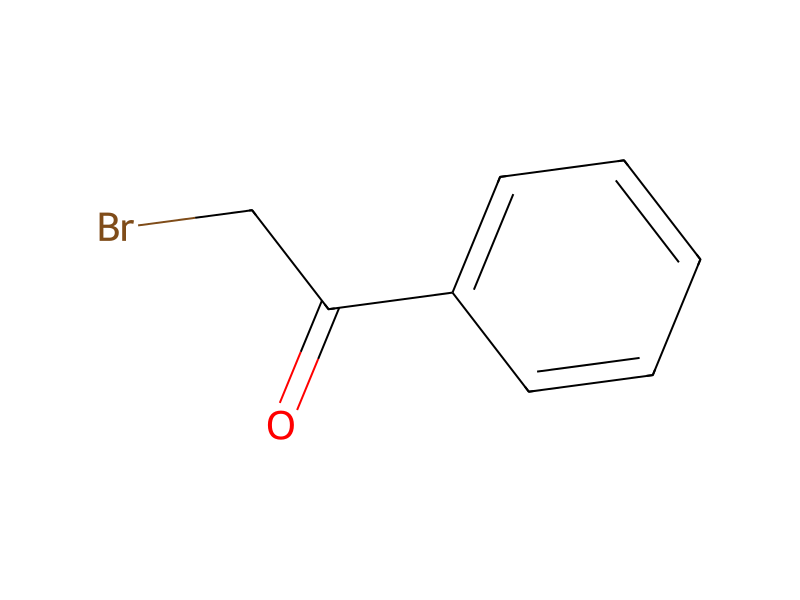

Produkt 1

Reagenzien, Katalysatoren, Lösungsmittel 1

Versuchsvorschrift
To a solution of 5.69 g (20 mmol) of 3-[4-(2-aminopyridin-3-yloxy)butyl]thiazolidine-2,4-dione in 40 ml of ethanol, 3.98 g (20 mmol) of bromoacetophenone was added at room temperature, followed by refluxing for 1.5 hours. After the reaction mixture was cooled, the solvent was distilled off. The residue was dissolved in chloroform, washed with saturated aqueous sodium hydrogen carbonate and dried, after which the solvent was distilled off. The residue was purified by column chromatography (eluent, n-hexane/ethyl acetate=1/4) to yield 5.24 g (68.7%, light orange crystal) of the desired product.