Reaktionsgleichung

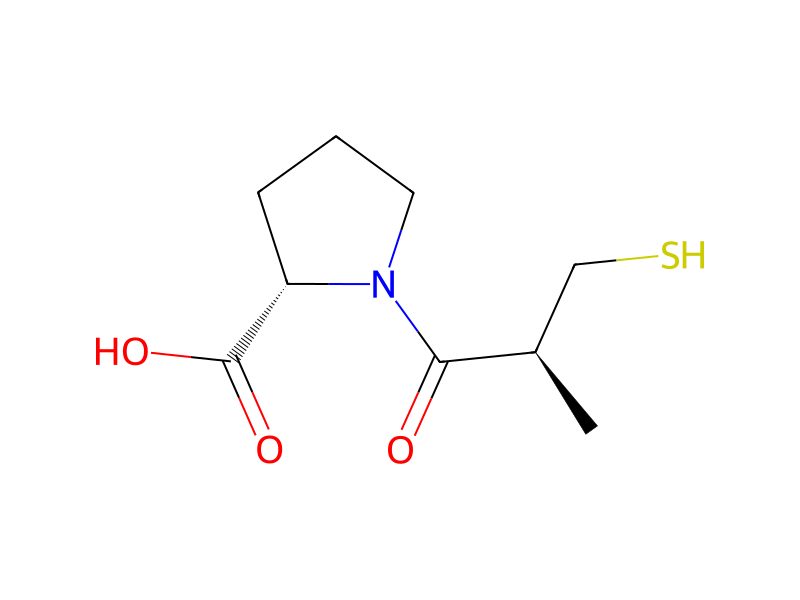
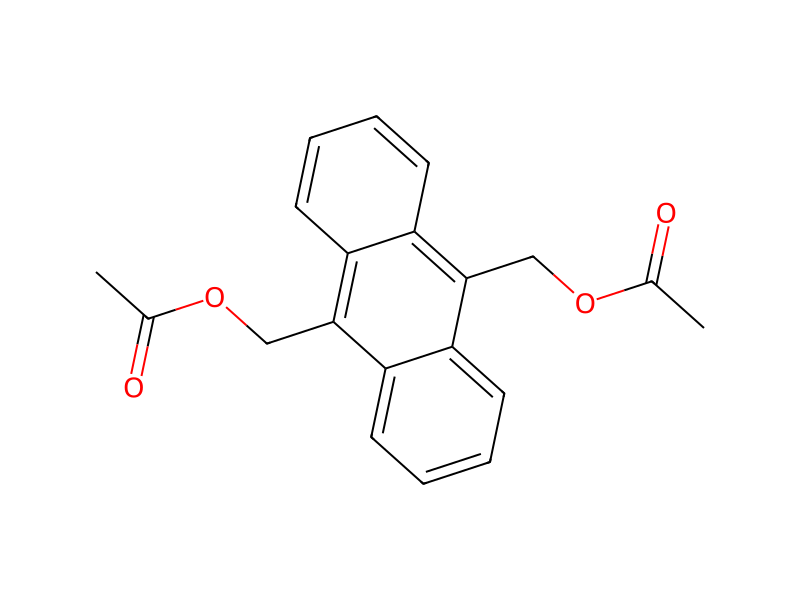
C[C@@H:2]([C:7]([N:9]1[C@H:13]([C:14](O)=O)[CH2:12][CH2:11][CH2:10]1)=O)CSN=O.C[C@@H](C(N1[C@H:27]([C:28](O)=O)[CH2:26][CH2:25][CH2:24]1)=O)CS.[N:31]([O-])=O.[Na+]>CC(OCC1C2C(=CC=CC=2)C(COC(C)=O)=C2C=1C=CC=C2)=O.S(=O)(=O)(O)O>[C:13]1([NH:9][CH2:7][CH2:2][NH2:31])[C:14]2[C:24](=[CH:25][CH:26]=[CH:27][CH:28]=2)[CH:10]=[CH:11][CH:12]=1Komponenten
6
Edukt 3


Produkt 1

Reagenzien, Katalysatoren, Lösungsmittel 2

Versuchsvorschrift
Typical preparations of S-nitrosocaptopril involve the reaction of 50 mM captopril with 50 mM NaNO2 in 0.1 N acetic or sulfuric acid at room temperature for five minutes, after which the reaction solution is passed over a cation exchange resin, e.g., Dowex 50 in the protonated form, and the product eluted with water. The fractions that give positive reactions with N-(1-naphthyl)ethylenediamine, after exposure to 0.15% HgCl2 and diazotization with sulfanilamide, are lyophilized. Hygroscopic, bright red crystals were obtained that were
Aufarbeitung
- washthe product eluted with water
Quellen und Nachweise
- ORD-Eintrag
- ord-855e4ea735f84408958842a4e014961c
- Quelldatensatz
- uspto-grants-1991_03
- Patentnummer
- US05002964
Verknüpfte Notizen
Wird geladen…