StartseiteMCPWorkbenchSkills
StartseiteWorkbenchBenachrichtigungenMein Bereich
llms.txt · MCP-AnleitungDatenschutz · Nutzungsbedingungen · Supportv1.8.0
  1. Startseite
  2. /Reaktion

Ammonia → M-Phenylenediamine

HRID 359908
Notizen
Druckvorschau

Reaktionsgleichung

Reaktionsgleichung von HRID 359908
[NH2-].[Na+].[C:3]([OH:22])(=O)[CH2:4]CCCCCC/C=C\CCCCCCCC.[N:23]1[CH:28]=[CH:27][CH:26]=[CH:25][C:24]=1[CH3:29].N.[H][H].[C:33]1([NH2:40])[CH:38]=[CH:37][CH:36]=[C:35]([NH2:39])[CH:34]=1.[OH2:41]>C1(C)C(C)=CC=CC=1>[C:33]([NH:40][C:24]1[CH:25]=[CH:26][CH:27]=[C:28]([NH:23][C:3](=[O:22])[CH3:4])[CH:29]=1)(=[O:41])[CH3:34].[N:40]1[CH:33]=[CH:38][CH:37]=[CH:36][C:35]=1[CH3:34].[C:33]1([NH2:40])[CH:38]=[CH:37][CH:36]=[C:35]([NH2:39])[CH:34]=1
KomponentenReaktionsbedingungenVersuchsvorschriftAufarbeitungQuellen und NachweiseNotizen zur Reaktion

Komponenten

11

Edukt 7

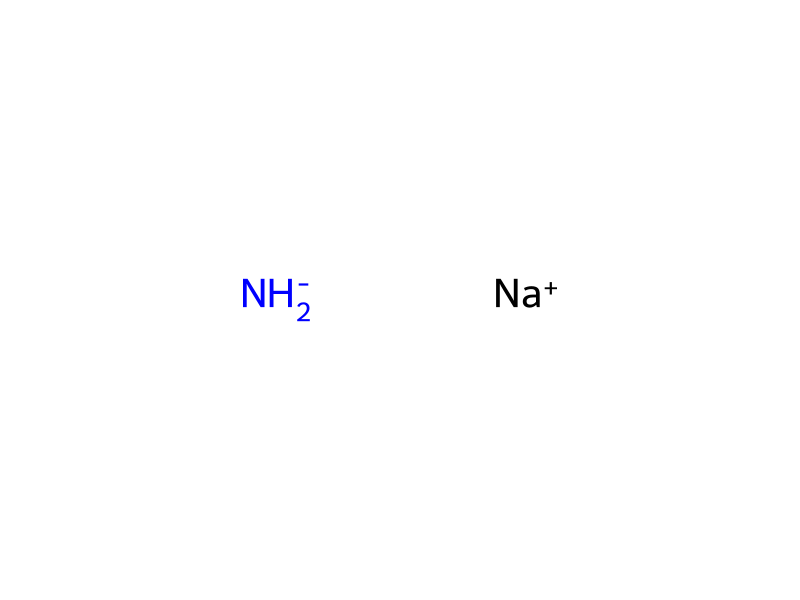
HCID 222AmmoniaHCID 962WaterHCID 7935M-Phenylenediamine2×HCID 79752-MethylpyridineHCID 24533Sodium amideHCID 445639Oleic AcidHCID 178418361HCID 178418361, Verbindung

Produkt 3

HCID 7935M-PhenylenediamineHCID 79752-MethylpyridineHCID 82506N,N'-1,3-Phenylenebis(acetamide)

Reagenzien, Katalysatoren, Lösungsmittel 1

HCID 7237O-XyleneLösungsmittel

Reaktionsbedingungen

Temperatur
190 °C

Versuchsvorschrift

A mixture of 105.7 g (2.71 moles) of sodamide and 337 cc of xylene containing 1.0 cc of oleic acid was placed in a liter Magne Drive, equipped as described in Example 15. The autoclave was closed, purged of air with nitrogen and pressurized to 100 psig with nitrogen (pressure relief valve was set at 100 psig). The sodamide slurry was heated with stirring to 190° C. and 191.7 g (2.06 moles) of 2-picoline was started adding from a Fisher-porter pressure bottle. The addition was completed over a period of 84 minutes within a temperature range of 188°-198° C. During the addition, ammonia and hydrogen were evolved and passed through the pressure relief valve. The reaction mixture was heated about 10 minutes longer, cooled to 40° C. and hydrolyzed with 200 cc of water. After adding 50 cc of ispropanol, the aqueous phase was separated. It was extracted twice, each time with 60 cc of a solution of 2 volumes of xylene to 1 volume of isopropanol. The original oil layer and extracts were combined and distilled to recover 37.7 g of 2-picoline. 48.7 g of 2-amino-6-methylpyridine and 72.8 g of material boiling from 212° C. at 102 mm to 220° C. at 104 mm. The material was a solid at room temperature and analyzed 90% pure by GLC. An analytical sample (m.p. 63.4°-64.6° C.) was prepared by recrystallization from isopropanol. The NMR spectra was identical with m-phenylenediamine. Anal. Calc'd. for C6H8N2 : C, 66.67; H, 7.41; N, 25.92. Found: C, 66.90; H, 7.21; N, 26.08. The N,N'-diacetyl-m-phenylenediamine derivative was prepared, m.p. 190°-191° C. Literature m.p. is 191° C. Beilstein 13, (1), 13. The yield of m-phenylenediamine, based on 2-picoline recovered, was 36.6%. The amination of 2-picoline at atmospheric pressure under standard Chichibabin conditions gives little if an m-phenylenediamine. The m-phenlenediamine is a rubber curing agent and is also valuable as a corrosion inhibitor.

Aufarbeitung

  1. customequipped
  2. customThe autoclave was closed
  3. custompurged of air with nitrogen
  4. temperatureThe sodamide slurry was heated
  5. additionThe addition
  6. temperatureThe reaction mixture was heated about 10 minutes longer
  7. additionAfter adding 50 cc of ispropanol
  8. customthe aqueous phase was separated
  9. extractionIt was extracted twice
  10. distillationdistilled
  11. customto recover 37.7 g of 2-picoline
  12. customboiling from 212° C. at 102 mm to 220° C. at 104 mm
  13. customat room temperature
  14. customAn analytical sample (m.p. 63.4°-64.6° C.) was prepared by recrystallization from isopropanol
  15. customrecovered

Quellen und Nachweise

ORD-Eintrag
ord-8a899f357df244bcb03137160f376e59
Quelldatensatz
uspto-grants-1991_03
DOI
10.6084/m9.figshare.5104873.v1
Patentnummer
US05003069

Notizen zur Reaktion

Wird geladen…

Auf dieser SeiteKomponentenReaktionsbedingungenVersuchsvorschriftAufarbeitungQuellen und NachweiseNotizen zur Reaktion