StartseiteMCPWorkbenchSkills
StartseiteWorkbenchBenachrichtigungenMein Bereich
llms.txt · MCP-AnleitungDatenschutz · Nutzungsbedingungen · Supportv1.8.3
  1. Startseite
  2. /Reaktion

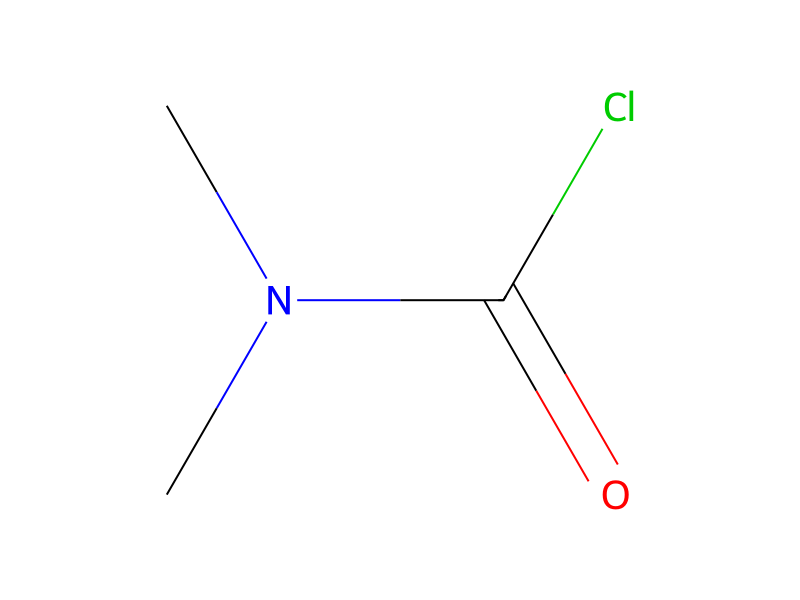
Dimethylcarbamoyl Chloride → 3-(Cyanomethyl)pyridine-2-carbonitrile

HRID 369023
Drucken

Reaktionsgleichung

Reaktionsgleichung von HRID 369023
[C:1]([CH2:3][C:4]1[CH:5]=[N+:6]([O-])[CH:7]=[CH:8][CH:9]=1)#[N:2].C[Si](C)(C)[C:13]#[N:14].CN(C)C(Cl)=O>ClCCl>[C:13]([C:5]1[C:4]([CH2:3][C:1]#[N:2])=[CH:9][CH:8]=[CH:7][N:6]=1)#[N:14]
KomponentenVersuchsvorschriftAufarbeitungQuellen und NachweiseNotizen zur Reaktion

Komponenten

5

Edukt 3

HCID 6598Dimethylcarbamoyl ChlorideHCID 82115Trimethylsilyl cyanideHCID 2431673-(Cyanomethyl)pyridin-1-ium-1-olate

Produkt 1

HCID 46725983-(Cyanomethyl)pyridine-2-carbonitrile

Reagenzien, Katalysatoren, Lösungsmittel 1

HCID 6344DichloromethaneLösungsmittel

Versuchsvorschrift

To a stirred suspension of 3-cyanomethylpyridine-N-oxide (30 g, 0.22 mol; for synthesis see Shigenobu Okuda, Michael M. Robison, J. Am. Chem. Soc. 81, 740 (1959)) in dichloromethane (200 ml) is added trimethylsilanecarbonitrile (26 g, 0.26 mol). To this suspension is added dimethylcarbamyl chloride (28 g, 0.26 mol). The mixture is stirred for 45 h. The solvent is removed and the residue dissolved in ethyl acetate. The solution is washed with 1 N NaOH and water and concentrated in vacuo. The product is purified by flash column chromatography on silica gel (15:2 toluene/acetone) affording the title compound. Mass M+H 144.1. Melting point 62-63° C.

Aufarbeitung

  1. customThe solvent is removed
  2. dissolutionthe residue dissolved in ethyl acetate
  3. washThe solution is washed with 1 N NaOH and water
  4. concentrationconcentrated in vacuo
  5. customThe product is purified by flash column chromatography on silica gel (15:2 toluene/acetone)

Quellen und Nachweise

ORD-Eintrag
ord-902b28c48d864fa98c2458152f224f06
Quelldatensatz
uspto-grants-2000_10
DOI
10.6084/m9.figshare.5104873.v1
Patentnummer
US06136821

Notizen zur Reaktion

Auf dieser SeiteKomponentenVersuchsvorschriftAufarbeitungQuellen und NachweiseNotizen zur Reaktion