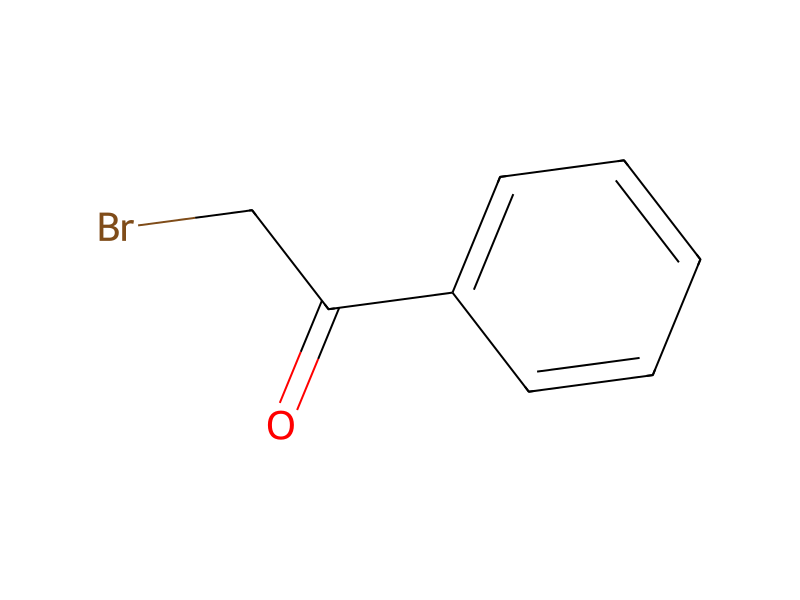
[CH3:1][C:2]1([CH3:16])[C:7](=[O:8])[NH:6][C:5]2[CH:9]=[C:10]([N+:13]([O-:15])=[O:14])[CH:11]=[CH:12][C:4]=2[O:3]1.[H-].[Na+].[CH2:19](Br)[C:20]([C:22]1[CH:27]=[CH:26][CH:25]=[CH:24][CH:23]=1)=[O:21]>CN(C)C=O>[CH3:1][C:2]1([CH3:16])[C:7](=[O:8])[N:6]([CH2:19][C:20]([C:22]2[CH:27]=[CH:26][CH:25]=[CH:24][CH:23]=2)=[O:21])[C:5]2[CH:9]=[C:10]([N+:13]([O-:15])=[O:14])[CH:11]=[CH:12][C:4]=2[O:3]1In an argon gas stream, 2.0 g of 3,4-dihydro-2,2-dimethyl-6-nitro-3-oxo-2H-1,4-benzoxazine was added gradually to 0.4 g of 60% sodium hydride in oil in 40 ml of dry N,N-dimethylformamide. The mixture was stirred at room temperature for 1 hour and 2.68 g of phenacyl bromide was added. The mixture was stirred at room temperature for 1 hour, after which the solvent was distilled off under reduced pressure. The residue was diluted with 50 ml of water and extracted with ethyl acetate. The extract was dried over anhydrous magnesium sulfate and concentrated under reduced pressure. The residue was chromatographed on a silica gel column and elution was carried out with methylene chloride-ethyl acetate. Recrystallization from ethyl acetate-ether gave 2.04 g of 3,4-dihydro-2,2-dimethyl-6-nitro-3-oxo-4-phenacyl-2H-1,4-benzoxazine.