Reaktionsgleichung

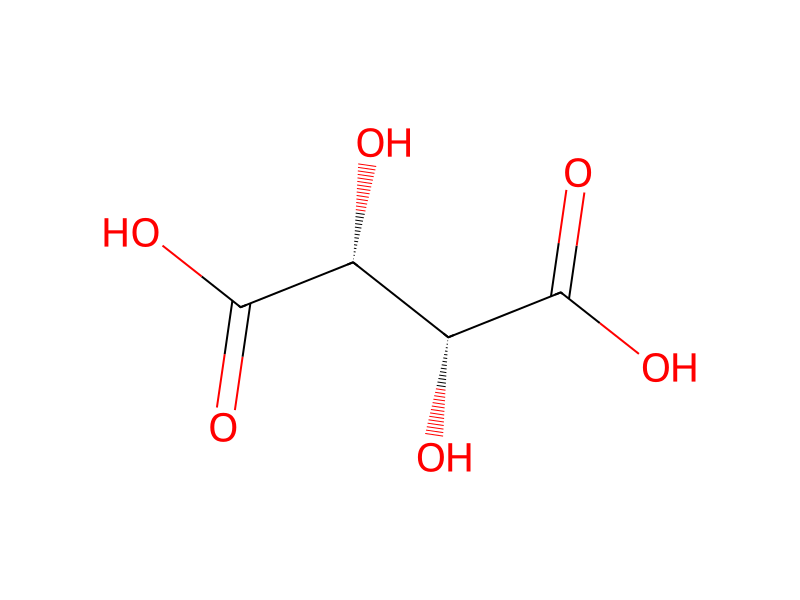
[C:1]([C@@H:4]([C@H:6]([C:8]([O-:10])=[O:9])[OH:7])[OH:5])([O-:3])=[O:2].[Na+].[Na+].C([C@@H]([C@H](C([O-])=O)O)O)([O-])=O.[Ca+2]>>[C:8]([OH:10])(=[O:9])[C@@H:6]([C@H:4]([C:1]([OH:3])=[O:2])[OH:5])[OH:7]Komponenten


Versuchsvorschrift
The experiment of Example 1 was repeated by following the same procedure, except the strain of Acetobacter curtus No. 21 (FERM-P No. 2881) was used in place of the strain of Acetobacter curtus No. 4. From the culture broth, clean microbic cells were obtained by following the procedure of Example 3. The clean cells were suspended in about 30 ml of acetone and then subjected to centrifugation. This cleaning of the cells with acetone was repeated to give a total of three cycles. The clean cell was dried at a temperature of not more than 30° C under reduced pressure to afford acetone-dried microbic cells. The treatment of Example 5 was repeated by following the same procedure, except 0.1 g of the acetone-dried cells were used and 1.0 g of sodium calcium cis-epoxysuccinate was used as the substrate. The substrate in the mixture was wholly used up to produce sodium L(+)-tartrate and calcium L(+)-tartrate. The amount of sodium L(+)-tartrate was 0.49 g and that of calcium L(+)-tartrate was 0.48 g and the combined yield was 97 percent. The L(+)-tartaric acid obtained by following the procedure of Example 3 was found to have an optical purity of 100 percent.
Quellen und Nachweise
- ORD-Eintrag
- ord-5af862b0e24d409a967be07a0c26bb0c
- Quelldatensatz
- uspto-grants-1978_05
- Patentnummer
- US04092220
Verknüpfte Notizen
Wird geladen…