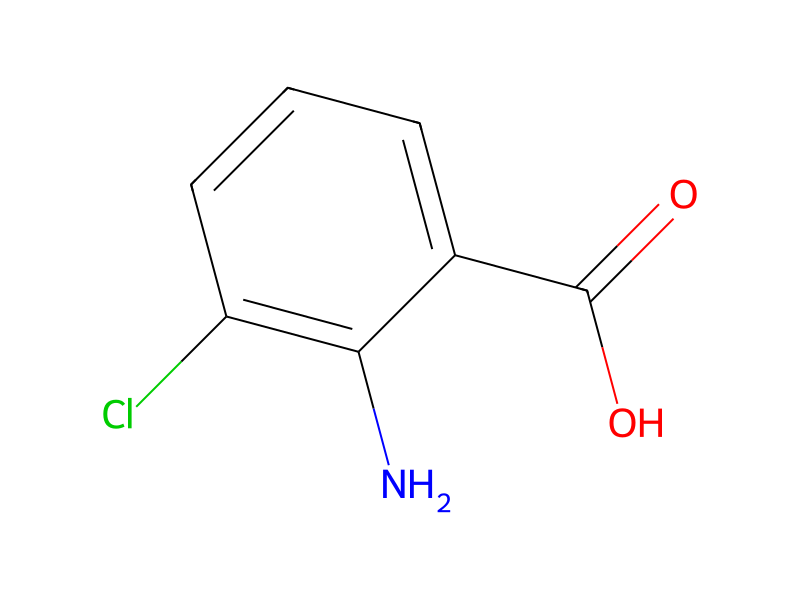
[Cl:1][C:2]1[CH:3]=[C:4]([NH2:12])[C:5](=[C:9]([Cl:11])[CH:10]=1)[C:6]([OH:8])=O.[NH:13]1[C:23]2[C:18](=[CH:19][CH:20]=[CH:21][CH:22]=2)C(=O)C1=O.OO.ClC1C=CC=C(C(O)=O)C=1N.NOC1CCCCCC=1>C1(C)C=CC=CC=1>[Cl:11][C:9]1[CH:10]=[C:2]([Cl:1])[CH:3]=[C:4]2[C:5]=1[C:6](=[O:8])[N:13]1[CH2:22][CH2:21][CH2:20][CH2:19][CH2:18][C:23]1=[N:12]2To a stirred suspension of 15 g of 4,6-dichloroanthranilic acid (prepared from the corresponding isatine: T. Sandmeyer Helv. Chim. Acta, 2:234 (1919), by oxidation with alkaline hydrogen peroxide, following the procedure described by Baker et al., J. Org. Chem., 17:141 (1952) for the synthesis of 3-chloroanthranilic acid) in 100 mL of toluene was added 20 g of 1-aza-2-methoxy-1-cycloheptene. The mixture was stirred for an hour at room temperature, followed by heating under reflux for 18 hours. Then the mixture was concentrated in vacuo and volatile material was removed at 130° C. at 1 torr. The dark brown residue was chromatographed using 8:1 chloroform-ethyl acetate to give 9 g of the desired material as a crystalline solid, m.p. 110° C.-112° C.
Wird geladen…