StartseiteMCPWorkbenchSkills
StartseiteWorkbenchBenachrichtigungenMein Bereich
llms.txt · MCP-AnleitungDatenschutz · Nutzungsbedingungen · Supportv1.8.0
  1. Startseite
  2. /Reaktion

Hydrogen Peroxide → 1,3-Dichloro-7,8,9,10-tetrahydro-6,10-methanoazepino[2,1-b]quinazolin-12(6H)-one

HRID 375612
Notizen
Druckvorschau

Reaktionsgleichung

Reaktionsgleichung von HRID 375612
[CH:1]12[CH2:9][CH:5]([NH:6][C:7]1=O)[CH2:4][CH2:3][CH2:2]2.P(Cl)(Cl)(Cl)=O.[Cl:15][C:16]1[CH:17]=[C:18]([NH2:26])[C:19](=[C:23]([Cl:25])[CH:24]=1)[C:20](O)=[O:21].N1C2C(=CC=CC=2)C(=O)C1=O.OO.ClC1C=CC=C(C(O)=O)C=1N.C([O-])([O-])=O.[K+].[K+]>C(Cl)(Cl)Cl.C(N(CC)CC)C>[Cl:25][C:23]1[CH:24]=[C:16]([Cl:15])[CH:17]=[C:18]2[C:19]=1[C:20](=[O:21])[N:6]1[CH:5]3[CH2:9][CH:1]([CH2:2][CH2:3][CH2:4]3)[C:7]1=[N:26]2
KomponentenVersuchsvorschriftAufarbeitungQuellen und NachweiseNotizen zur Reaktion

Komponenten

10

Edukt 7

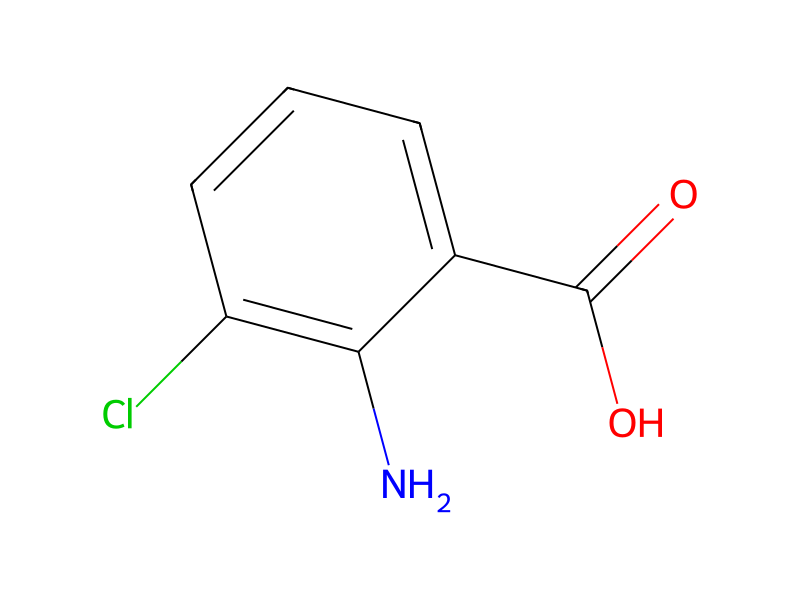
HCID 784Hydrogen PeroxideHCID 7054IsatinHCID 11430Potassium CarbonateHCID 24813Phosphorus oxychlorideHCID 808072-Amino-3-chlorobenzoic acidHCID 2904984,6-Dichloroanthranilic acidHCID 12209229HCID 12209229, Verbindung

Produkt 1

HCID 189926121,3-Dichloro-7,8,9,10-tetrahydro-6,10-methanoazepino[2,1-b]quinazolin-12(6H)-one

Reagenzien, Katalysatoren, Lösungsmittel 2

HCID 6212ChloroformLösungsmittel2×HCID 8471TriethylamineLösungsmittel

Versuchsvorschrift

To a solution of 3.82 g of 6-azabicyclo[3,2,1]-octan-7-one (R. L. Augustine and L. A. Bag, J. Org. Chem., 40:1074 (1975)) in 25 mL of chloroform was added 4 mL of phosphorus oxychloride. After the mildly exothermic reaction ceased, the mixture was stirred at room temperature for 4 hours. 6.3 g of 4,6-dichloroanthranilic acid (prepared from the corresponding isatine: T. Sandmeyer, Helv. Chim. Acta, 2:234 (1919), by oxidation with alkaline hydrogen peroxide, following the procedure described by Baker, et al., J. Org. Chem., 17:141 (1952) for the synthesis of 3-chloroanthranilic acid) was dissolved in a mixture of 50 mL of chloroform and 10 mL of triethylamine. This solution was added to the stirred above solution of the imidoyl chloride at such a rate as to prevent boiling over (exothermic!), approximately 2 minutes. Then the mixture was stirred at room temperature for 4 hours and then refluxed for 3 days. Then the dark brown mixture was treated with 200 mL of 10% aqueous K2CO3. The chloroform layer was separated, aqueous layer was extracted two times with 50 mL of chloroform. The combined chloroform extract was dried with anhydrous potassium carbonate, filtered, and concentrated in vacuo. The residue was chromatographed on silica gel, using 8:1 chloroform-ethyl acetate as eluent. The corresponding fractions were concentrated in vacuo, giving a crystalline solid. This was recrystallized from ethyl acetate-hexane, giving colorless crystals.

Aufarbeitung

  1. customAfter the mildly exothermic reaction
  2. additionThis solution was added to the
  3. customover (exothermic!), approximately 2 minutes
  4. stirringThen the mixture was stirred at room temperature for 4 hours
  5. temperaturerefluxed for 3 days
  6. customThe chloroform layer was separated
  7. extractionaqueous layer was extracted two times with 50 mL of chloroform
  8. extractionThe combined chloroform extract
  9. dry with materialwas dried with anhydrous potassium carbonate
  10. filtrationfiltered
  11. concentrationconcentrated in vacuo
  12. customThe residue was chromatographed on silica gel
  13. concentrationThe corresponding fractions were concentrated in vacuo
  14. customgiving a crystalline solid
  15. customThis was recrystallized from ethyl acetate-hexane
  16. customgiving colorless crystals

Quellen und Nachweise

ORD-Eintrag
ord-d1fb9e5838a84819aec85408c77daf62
Quelldatensatz
uspto-grants-1996_01
DOI
10.6084/m9.figshare.5104873.v1
Patentnummer
US05486512

Notizen zur Reaktion

Wird geladen…

Auf dieser SeiteKomponentenVersuchsvorschriftAufarbeitungQuellen und NachweiseNotizen zur Reaktion