StartseiteMCPWorkbenchSkills
StartseiteWorkbenchBenachrichtigungenMein Bereich
llms.txt · MCP-AnleitungDatenschutz · Nutzungsbedingungen · Supportv1.8.2
  1. Startseite
  2. /Reaktion

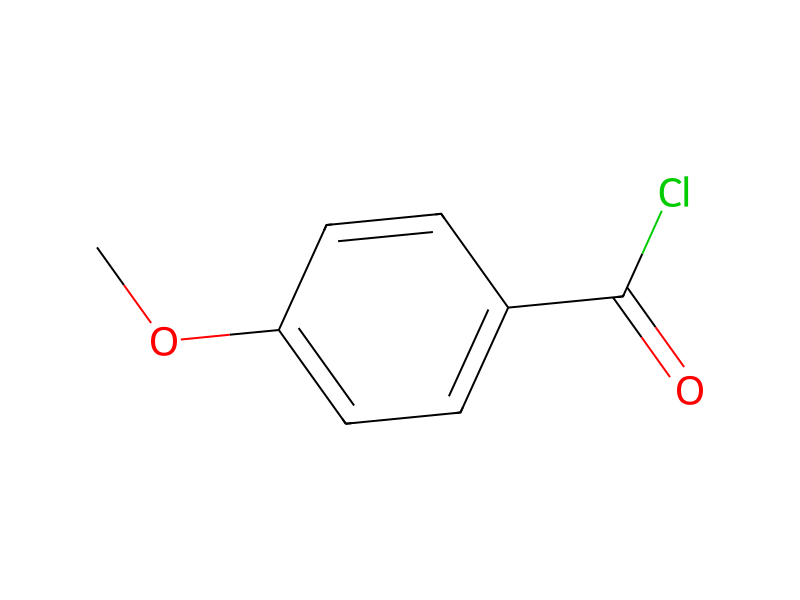
p-Anisoyl chloride → [6-Hydroxy-2-(4-hydroxyphenyl)-1-benzothiophen-3-YL](4-methoxyphenyl)methanone

HRID 377420
Drucken

Reaktionsgleichung

Reaktionsgleichung von HRID 377420
C(Cl)(=O)C1C=CC(OC)=CC=1.C[O:13][C:14]1[CH:19]=[CH:18][C:17]([C:20]2[S:24][C:23]3[CH:25]=[C:26]([O:29]C)[CH:27]=[CH:28][C:22]=3[C:21]=2[C:31](=[O:40])[C:32]2[CH:37]=[CH:36][C:35]([O:38][CH3:39])=[CH:34][CH:33]=2)=[CH:16][CH:15]=1.B(Cl)(Cl)Cl>ClCCCl>[OH:13][C:14]1[CH:15]=[CH:16][C:17]([C:20]2[S:24][C:23]3[CH:25]=[C:26]([OH:29])[CH:27]=[CH:28][C:22]=3[C:21]=2[C:31](=[O:40])[C:32]2[CH:37]=[CH:36][C:35]([O:38][CH3:39])=[CH:34][CH:33]=2)=[CH:18][CH:19]=1
KomponentenReaktionsbedingungenVersuchsvorschriftAufarbeitungQuellen und NachweiseNotizen zur Reaktion

Komponenten

5

Edukt 3

HCID 7477p-Anisoyl chlorideHCID 25135Boron Trichloride2×HCID 9953060LY88074 Trimethyl ether

Produkt 1

HCID 9842621[6-Hydroxy-2-(4-hydroxyphenyl)-1-benzothiophen-3-YL](4-methoxyphenyl)methanone

Reagenzien, Katalysatoren, Lösungsmittel 1

HCID 111,2-DichloroethaneLösungsmittel

Reaktionsbedingungen

Temperatur
2.5 °C

Versuchsvorschrift

A 100 mL, 3 neck, round bottom flask fitted with a mechanical agitator, glass stopper, and outlet to a caustic scrubber is charged with p-anisoyl chloride (3.47 g, 20.34 mmol), 2-(4-methoxyphenyl)-3-(4-methoxybenzoyl)-6-methoxybenzo[b]thiophene (5.0 g, 18.49 mmol) and 30 mL 1,2-dichloroethane. The mixture is cooled to 0-5° C. and previously condensed boron trichloride (4.7 mL, 55.0 mmol) is added in one portion. The mixture is stirred at 0-50° C. for 7.5 hours then more boron trichloride (4.7 mL, 55.0 mmol) is added. The cooling bath is removed and the reaction mixture is stirred at ambient temperature for 16 hours. After the overnight stir, the mixture is poured into 500 mL of agitated ice/water which caused precipitation of the monomethoxy product. The reaction vessel is rinsed in with 1,2-dichloroethane and the slurry is stirred for 1 hour. Then, 200 mL of methylene chloride is added and the mixture is vacuum filtered washing with methylene chloride. The solid is dried overnight in a vacuum oven at 40° C. to afford 6.3 g (82.4%) of monomethoxy product as a yellow solid. An analytical sample is obtained by chromatography on silica gel (20:1 methylene chloride/methanol). mp 127-128° C. (dec); 1H NMR (300.1 MHz, DMSO-d6) δ 3.76 (s, 3H), 6.66 (d, 2H), 6.85 (dd, 1H), 6.87 (d, 2H), 7.16 (d, 2H), 7.25 (d, 1H), 7.33 (s, 1H), 7.66 (d, 2H), 9.76 (br s, 2H); 13C NMR (75.5 MHz, DMSO-d6) d 55.5, 107.1, 114.0, 115.2, 115.7, 123.3, 123.8, 129.7, 131.8, 132.3, 139.2, 140.4, 155.4, 157.8, 163.5, 192.6; MS (FD+) m/e 376(100), 377(25), 378(7); Analysis calc'd for C22H16O4S: C, 70.20; H, 4.28; S, 8.52; found: C, 70.09; H, 4.27; S, 8.45.

Aufarbeitung

  1. customA 100 mL, 3 neck, round bottom flask fitted with a mechanical agitator, glass stopper, and outlet to a caustic scrubber
  2. additionis added in one portion
  3. customThe cooling bath is removed
  4. stirringthe reaction mixture is stirred at ambient temperature for 16 hours
  5. stirringAfter the overnight stir
  6. additionthe mixture is poured into 500 mL of agitated ice/water which
  7. customprecipitation of the monomethoxy product
  8. washThe reaction vessel is rinsed in with 1,2-dichloroethane
  9. stirringthe slurry is stirred for 1 hour
  10. additionThen, 200 mL of methylene chloride is added
  11. filtrationfiltered
  12. washwashing with methylene chloride
  13. customThe solid is dried overnight in a vacuum oven at 40° C.
  14. customto afford 6.3 g (82.4%) of monomethoxy product as a yellow solid
  15. customAn analytical sample is obtained by chromatography on silica gel (20:1 methylene chloride/methanol)

Quellen und Nachweise

ORD-Eintrag
ord-716159df2e55440c8f3e8ae113ed6081
Quelldatensatz
uspto-grants-2000_02
DOI
10.6084/m9.figshare.5104873.v1
Patentnummer
US06025495

Notizen zur Reaktion

Auf dieser SeiteKomponentenReaktionsbedingungenVersuchsvorschriftAufarbeitungQuellen und NachweiseNotizen zur Reaktion
