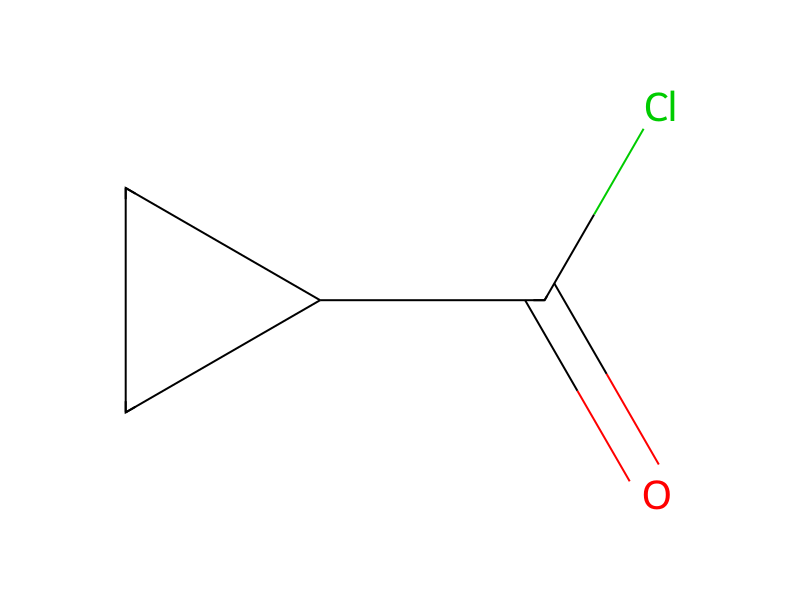
[C:1]([C:3]1[C:7](I)=[CH:6][N:5]([C:9]2[C:14]([Cl:15])=[CH:13][C:12]([C:16]([F:19])([F:18])[F:17])=[CH:11][C:10]=2[Cl:20])[N:4]=1)#[N:2].C([Li])CCC.[CH:26]1([C:29](Cl)=[O:30])[CH2:28][CH2:27]1.C(=O)([O-])O.[Na+]>O1CCCC1>[C:1]([C:3]1[C:7]([C:29]([CH:26]2[CH2:28][CH2:27]2)=[O:30])=[CH:6][N:5]([C:9]2[C:14]([Cl:15])=[CH:13][C:12]([C:16]([F:19])([F:18])[F:17])=[CH:11][C:10]=2[Cl:20])[N:4]=1)#[N:2]To a stirred solution of 3-cyano-1-(2,6-dichloro-4-trifluoromethylphenyl)-4-iodopyrazole (0.22 g) in tetrahydrofuran (5 ml) at -78° C. under an atmosphere of nitrogen was added, at such a rate that the temperature of the reaction mixture did not exceed -65° C., n-butyllithium (0.21 ml of a 2.5M solution in hexanes). After stirring for a further 5 minutes cyclopropanecarbonyl chloride (0.13 ml) was added and the mixture allowed to warm to room temperature. The reaction mixture was poured into saturated aqueous sodium hydrogen carbonate solution (5 ml) and extracted twice with ether (25 ml). The combined organic layers were washed with water (50 ml), dried (Na2SO4) and evaporated to give a brown oil which was purified by column chromatography on silica gel (40 g) eluted with dichloromethane. Combination and evaporation of suitable fractions gave the title compound as a white solid, m.p. 195-197° C.