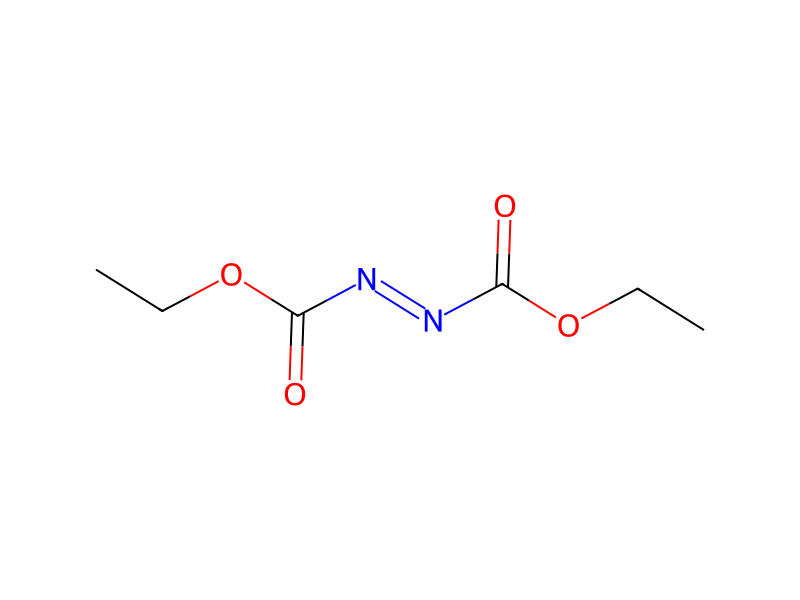
CCOC(/N=N/C(OCC)=O)=O.C1(P(C2C=CC=CC=2)C2C=CC=CC=2)C=CC=CC=1.[OH:32][C@H:33]([CH:38]([CH3:40])[CH3:39])[C:34]([O:36][CH3:37])=[O:35].[C:41]1([C:47]2[CH:52]=[CH:51][C:50](O)=[CH:49][CH:48]=2)[CH:46]=[CH:45][CH:44]=[CH:43][CH:42]=1>O1CCCC1>[C:41]1([C:47]2[CH:48]=[CH:49][CH:50]=[CH:51][CH:52]=2)[CH:46]=[CH:45][C:44]([O:32][C@@H:33]([CH:38]([CH3:40])[CH3:39])[C:34]([O:36][CH3:37])=[O:35])=[CH:43][CH:42]=1Diethylazodicarboxylate (11.5 ml) in dry tetrahydrofuran (40 ml) was added dropwise over 30 minutes to a stirred solution of triphenylphosphine (22 g), methyl (R)-2-hydroxy-3-methylbutanoate (11.2 g, J.Am.Chem.Soc., (1990), 112, 21, 7659) and 4-phenylphenol (14.5 g) in dry tetrahydrofuran (120 ml). The resulting solution was stirred at room temperature overnight and was then concentrated under reduced pressure. A mixture of isohexane:ether (9:1) (750 ml) was added to the residue and the mixture stirred at room temperature for 30 minutes. The solution was filtered and the filtrate concentrated under reduced pressure. The residue was purified by column chromatography over silica eluting with isohexane:dichloromethane (1:4) then (1:1) to give the sub-title compound as a solid, which was recrystallised from hexane to give a crystalline solid (7.9 g).