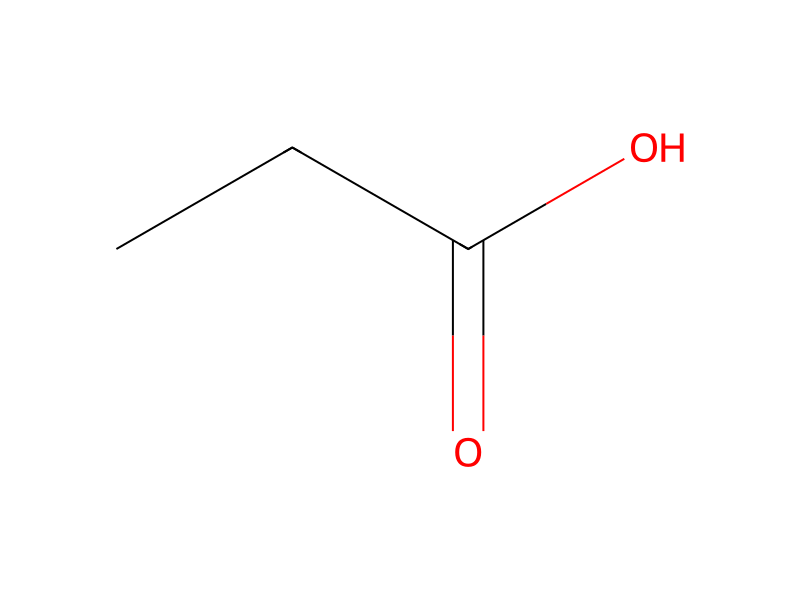
[Cl:1][C:2]1[CH:3]=[C:4]([NH:14][C:15](=[O:22])[C:16]2[CH:21]=[CH:20][CH:19]=[CH:18][N:17]=2)[CH:5]=[CH:6][C:7]=1[N:8]1[CH2:13][CH2:12][NH:11][CH2:10][CH2:9]1.[C:23](O)(=[O:26])[CH2:24][CH3:25].CCN=C=NCCCN(C)C.Cl.CCN(CC)CC.OC1C2N=NNC=2C=CC=1>C(Cl)Cl>[Cl:1][C:2]1[CH:3]=[C:4]([NH:14][C:15](=[O:22])[C:16]2[CH:21]=[CH:20][CH:19]=[CH:18][N:17]=2)[CH:5]=[CH:6][C:7]=1[N:8]1[CH2:13][CH2:12][N:11]([C:23](=[O:26])[CH2:24][CH3:25])[CH2:10][CH2:9]1According to Scheme 5 Step 5 Method A: A solution of N-(3-chloro-4-(piperazin-1-yl)phenyl)picolinamide (0.19 mmol, 60 mg), propionic acid (0.19 mmol, 14 μL), EDCI.HCl (0.28 mmol, 54 mg), Et3N (0.38 mmol, 53 μL) and of hydroxybenzotriazole (0.21 mmol, 32 mg) in DCM (5 mL) was stirred at room temperature for 1 day. The solution was quenched with water. The aqueous phase was extracted with DCM. The organic phase was washed with brine, was dried over Na2SO4, was filtered and was concentrated under reduced pressure. The solid was triturated with water and finally with iPr2O to afford N-(3-chloro-4-(4-propionylpiperazin-1-yl)phenyl)picolinamide (0.14 mmol, 51 mg, 72%) as a yellow solid.