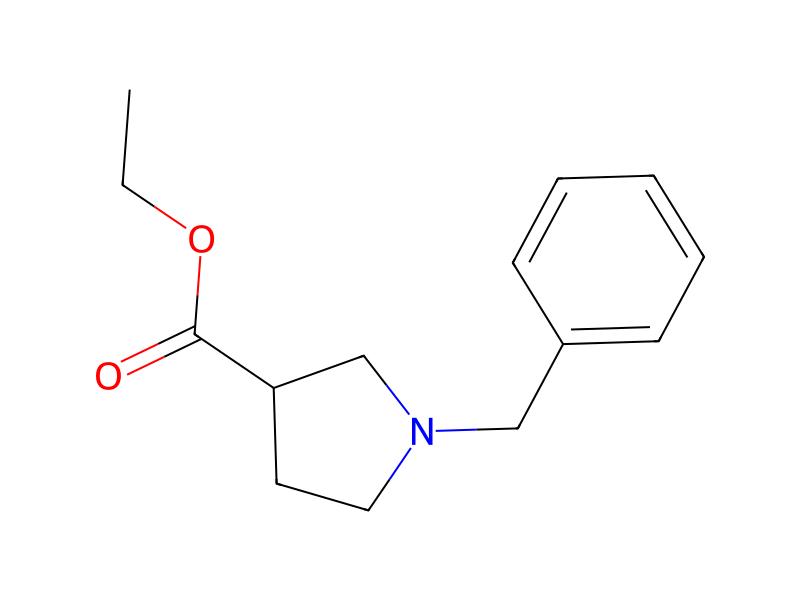
To DIPA (3.6 mL) was added dropwise a 2.64 M solution of n-butyl lithium in hexane (8.93 mL) at −78° C., followed by stirring for 30 minutes. To the reaction mixture was added ethyl 1-benzyl-pyrrolidine-3-carboxylate (5.0 g), followed by stirring for 30 minutes. To the reaction mixture was added dropwise a solution of 1,2-dibromoethane (6.05 g) in THF, followed by warming to room temperature and stirring for 2 hours. To the reaction mixture was added an aqueous K2CO3 solution, followed by extraction with EtOAc. The aqueous layer was concentrated under reduced pressure, and to the residue was added EtOH, followed by stirring at room temperature for 30 minutes. The insolubles were removed by filtration and the filtrate was concentrated under reduced pressure. To the residue was added EtOH, followed by stirring at room temperature for 10 minutes. The insolubles were removed by filtration, and the filtrate was concentrated under reduced pressure to obtain 1-benzyl-1-azoniabicyclo[2.2.1]heptane-4-carboxylate (3.25 g) as a colorless solid.