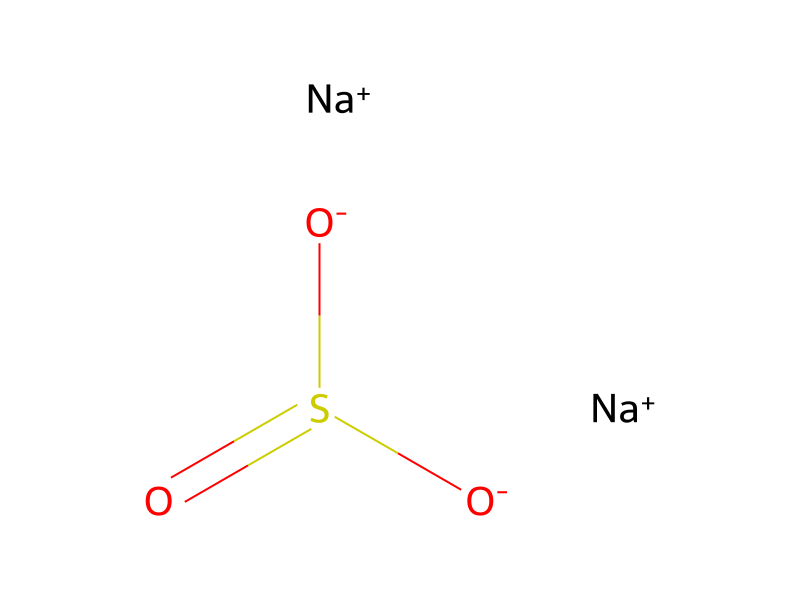
Carbon disulfide (0.26 mL, 4.4 mmol) was added to a mixture comprising 4-(4-aminophenyl)butyric acid (0.27 g, 1.5 mmol), tetrahydrofuran (1.0 mL), water (1.0 mL) and triethylamine (0.51 mL, 3.6 mmol), followed by stirring at room temperature for 24 hours. To the obtained reaction mixture, a tetrahydrofuran (1.0 mL) solution of iodine (0.41 g, 1.6 mmol) was dropwise added over a period of 5 minutes at 0° C., followed by stirring at 0° C. for further 1.5 hours. Thereafter, 1M hydrochloric acid (1.5 mL) and sodium sulfite (38 mg, 0.30 mmol) were added and mixed. Then, ethyl acetate (6 mL) was added, and the organic layer was separated, and the aqueous layer was extracted once with a solvent mixture of ethyl acetate (3 mL) and tetrahydrofuran (1 mL). The organic layers were combined and concentrated under reduced pressure to dryness. To the obtained residue, water (8.0 mL) and saturated sodium hydrogencarbonate aqueous solution (2.0 mL) were added and thoroughly mixed. Thereafter, the insoluble matter was filtered off, and to the filtrate, water (8.0 mL) and saturated sodium hydrogencarbonate aqueous solution (2.0 mL) were added and thoroughly mixed, and an insoluble matter was filtered off. The filtrates were combined, and 1M hydrochloric acid (5.0 mL) was added thereto. The precipitated solid was collected by filtration to obtain 4-(4-isothiocyanatophenyl)butyric acid as a colorless solid (0.23 g, yield: 69%, HPLC purity: 97%, HPLC retention time: 3.9 min). LC-MS ES-220(retention time: 4.3 min, condition 2).