StartseiteMCPWorkbenchSkills
StartseiteWorkbenchBenachrichtigungenMein Bereich
llms.txt · MCP-AnleitungDatenschutz · Nutzungsbedingungen · Supportv1.8.0
  1. Startseite
  2. /Reaktion

Dimethyl muconate, (E,E)- → Dimethyl 1,4-cyclohexanedicarboxylate

HRID 385219
Notizen
Druckvorschau

Reaktionsgleichung

Reaktionsgleichung von HRID 385219
C(OC)(=O)/C=C/C=C/C(OC)=O.[CH:13]1([C:23]([O:25][CH3:26])=[O:24])[CH2:18][CH2:17][CH:16]([C:19]([O:21][CH3:22])=[O:20])[CH:15]=[CH:14]1.[C:27]1([C:37]([O:39][CH3:40])=[O:38])[CH2:32][CH2:31][CH:30]([C:33]([O:35][CH3:36])=[O:34])[CH2:29][CH:28]=1>[Pd].COCCOCCOC>[C:19]([O:21][CH3:22])(=[O:20])[C:16]1[CH:17]=[CH:18][C:13]([C:23]([O:25][CH3:26])=[O:24])=[CH:14][CH:15]=1.[CH:30]1([C:33]([O:35][CH3:36])=[O:34])[CH2:29][CH2:28][CH:27]([C:37]([O:39][CH3:40])=[O:38])[CH2:32][CH2:31]1
KomponentenReaktionsbedingungenVersuchsvorschriftAufarbeitungQuellen und NachweiseNotizen zur Reaktion

Komponenten

7

Edukt 3

HCID 5370244Dimethyl muconate, (E,E)-HCID 13633969Dimethyl cyclohex-1-ene-1,4-dicarboxylateHCID 59071935Dimethyl cyclohex-2-ene-1,4-dicarboxylate

Produkt 2

HCID 7198Dimethyl 1,4-cyclohexanedicarboxylateHCID 8441Dimethyl terephthalate

Reagenzien, Katalysatoren, Lösungsmittel 2

HCID 23938
Palladium
Katalysator
2×
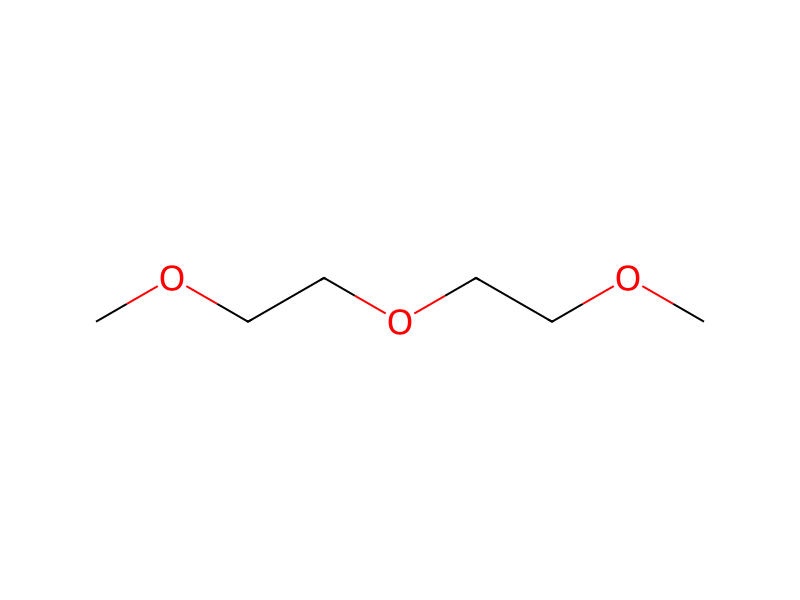
HCID 8150DiglymeLösungsmittel2×

Reaktionsbedingungen

Temperatur
165 °C

Versuchsvorschrift

In a Parr reactor, a mixture of trans,trans dimethyl muconate (6.13 g, 36.0 mmol) and diglyme (120 ml, 0.30 M) is heated to 165° C. for 24 hours under ethylene pressure (pRT=259 psi (1.79 MPa)). After cooling to room temperature, the weakly yellow, clear solution is diluted using diglyme to 200 ml in a volumetric flask, transferred into a round-bottom flask equipped with a magnetic stirring bar, and catalytic palladium on carbon (Pd/C) is added (356 mg of Johnson-Matthey 5 percent Pd/C #6, 0.2 mole percent) at room temperature. The flask is equipped with a reflux condenser, fritted gas dispersion tube, and internal Temperature probe. Under N2 flow (190 ml/min) and stirring (190 rpm) the mixture is heated to reflux (Tmax,observed=169° C.) while samples were taken at appropriate intervals (i=0.0, 0.25, 0.5, 1.0, 2.0, 4.0, 8.0 h) to monitor the progress of the reactions occurring. Rapid (t≦1 h) disappearance of the dimethyl cyclohex-2-ene-1,4-dicarboxylate, □2, 2-ene is observed concurrent with some material undergoing tautomerization to its thermodynamically more stable isomer (dimethyl cyclohex-1-ene-1,4-dicarboxylate, □1, l-ene), while also the desired oxidation/dehydrogenation/aromatization product dimethyl terephthalate (DMT) and some reduced material (dimethyl cyclohexane-1,4-dicarboxylate CHa) are formed. After 8 hours reaction time, 77 percent DMT, 17 percent cyclohexane, and 5 percent tautomer are present. The graph of FIG. 2 shows the concentration of materials at various time intervals.

Aufarbeitung

  1. temperatureAfter cooling to room temperature
  2. additionthe weakly yellow, clear solution is diluted
  3. customtransferred into a round-bottom flask
  4. customequipped with a magnetic stirring bar
  5. customThe flask is equipped with a reflux condenser, fritted gas dispersion tube
  6. temperatureis heated
  7. temperatureto reflux (Tmax,observed=169° C.) while samples
  8. customwere taken at appropriate intervals (i=0.0, 0.25, 0.5, 1.0, 2.0, 4.0, 8.0 h)

Quellen und Nachweise

ORD-Eintrag
ord-011e31e57da645ed90b1b0fbe959e707
Quelldatensatz
uspto-grants-2013_02
DOI
10.6084/m9.figshare.5104873.v1
Patentnummer
US08367859B2

Notizen zur Reaktion

Wird geladen…

Auf dieser SeiteKomponentenReaktionsbedingungenVersuchsvorschriftAufarbeitungQuellen und NachweiseNotizen zur Reaktion