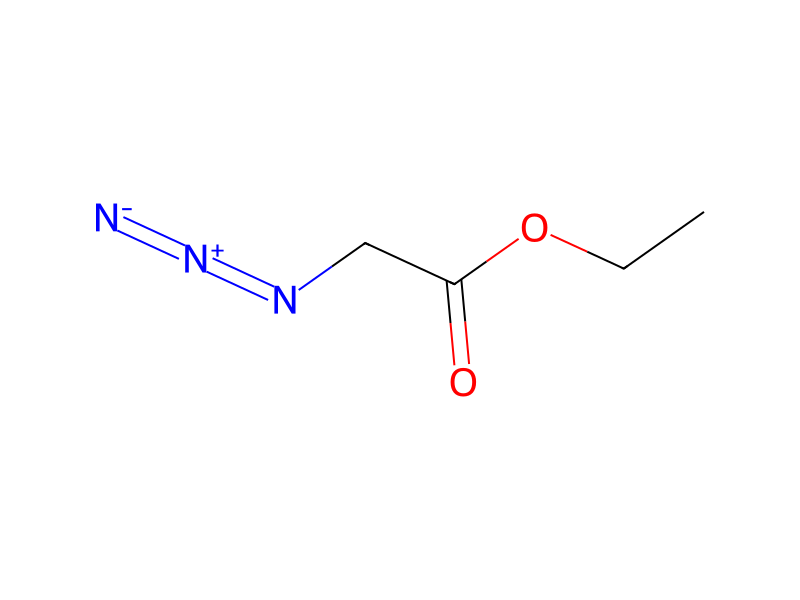
[Cl:1][C:2]1[CH:7]=[CH:6][C:5]([C:8]#[CH:9])=[CH:4][N:3]=1.[CH2:10]([O:12][C:13](=[O:18])[CH2:14][N:15]=[N+:16]=[N-:17])[CH3:11].CC(O)(C)C>O.O.O.O.O.O.S([O-])([O-])(=O)=O.[Cu+2]>[CH2:10]([O:12][C:13](=[O:18])[CH2:14][N:15]1[CH:9]=[C:8]([C:5]2[CH:4]=[N:3][C:2]([Cl:1])=[CH:7][CH:6]=2)[N:17]=[N:16]1)[CH3:11]2-Chloro-5-ethynylpyridine (100 mg, 0.73 mmol) and ethylazidoacetate (0.41 ml, 0.73 mmol) were taken up in water (1.5 ml) and 2-methylpropan-2-ol (1.5 ml) at room temperature. Aqueous solutions of copper(II) sulfate pentahydrate (9.08 mg, 0.036 mmol) in 1 mL of water and L-sodium ascorbate (28.8 mg, 0.145 mmol) in 1 mL of water were sequentially added, and the reaction was stirred at room temperature for 18 hours. The reaction was then quenched with saturated aqueous sodium bicarbonate, and extracted three times with ethyl acetate. The organic layers were combined, dried over anhydrous magnesium sulfate, filtered, and concentrated. The resulting crude product was purified by silica gel chromatography (0-65% ethyl acetate/hexanes) to afford the title compound.
Wird geladen…