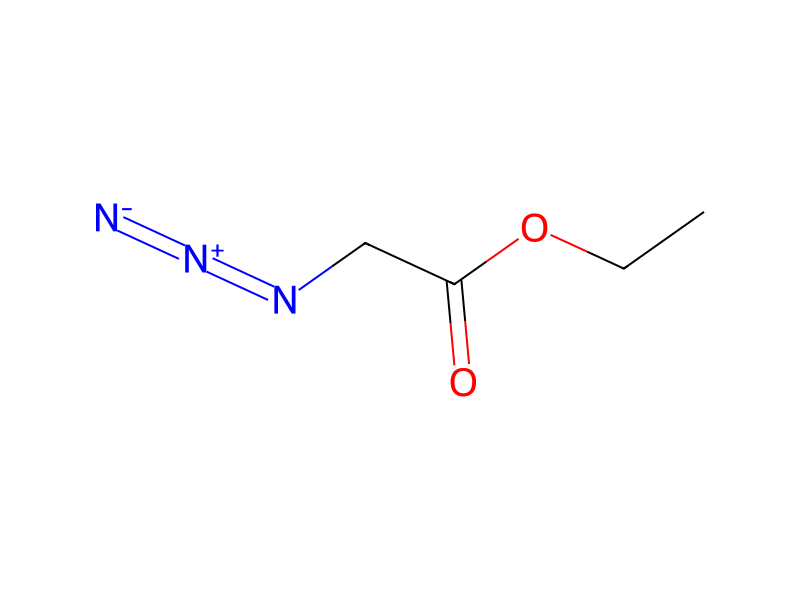
Acetic acid, azido-, ethyl ester → Ethyl{4-[(6-bromopyridin-2-yl)(hydroxy)methyl]-1h-1,2,3-triazol-1-yl}acetate
HRID 386075
Reaktionsgleichung

[Br:1][C:2]1[N:7]=[C:6]([CH:8]([OH:11])[C:9]#[CH:10])[CH:5]=[CH:4][CH:3]=1.[N:12]([CH2:15][C:16]([O:18][CH2:19][CH3:20])=[O:17])=[N+:13]=[N-:14].O=C1O[C@H]([C@H](CO)O)C([O-])=C1O.[Na+]>CC(O)(C)C.O.C([O-])(O)=O.[Na+]>[CH2:19]([O:18][C:16](=[O:17])[CH2:15][N:12]1[CH:10]=[C:9]([CH:8]([C:6]2[CH:5]=[CH:4][CH:3]=[C:2]([Br:1])[N:7]=2)[OH:11])[N:14]=[N:13]1)[CH3:20]Komponenten
7