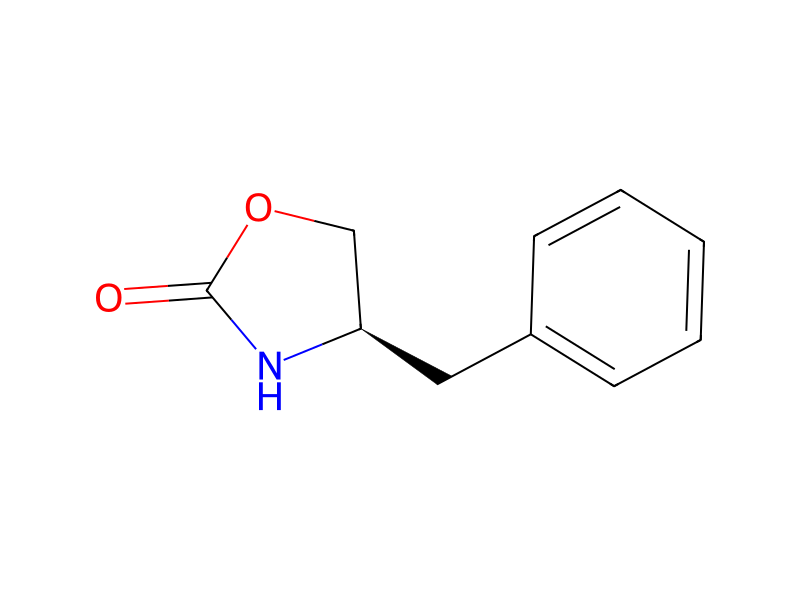
2-(4-Chloro-3-fluorophenyl)acetic acid (1.00 g, 5.30 mmol) was dissolved in THF (14 mL) at 0° C. and treated with triethylamine (0.81 mL, 5.8 mmol). Pivaloyl chloride (0.69 mL, 5.6 mmol) was then added to the solution, and the mixture was allowed to stir for one hour at 0° C. In a separate flask, (R)-4-benzyloxazolidin-2-one (0.987 g, 5.57 mmol) was dissolved in THF (14 mL) at −78° C. and treated with n-BuLi (2.54 mL, 5.83 mmol). The above anion solution was stirred for 20 minutes and then cannulated into the anhydride at −78° C. The reaction was then allowed to stir for one hour at −78° C., and then warmed to 0° C. for two hours. The mixture was quenched with the addition of saturated NH4Cl solution (20 mL) and concentrated in vacuo. The resulting residue was then partitioned between ethyl acetate and water. The aqueous layer was extracted once with ethyl acetate, and the organic fractions were combined, washed with brine, separated, dried over MgSO4, filtered, and concentrated in vacuo. The resulting residue was purified by column chromatography (3:1 hexanes:ethyl acetate) to give (R)-4-benzyl-3-(2-(4-chloro-3-fluorophenyl)acetyl)oxazolidin-2-one (0.95 g, 51%) as an oil, which solidified upon standing.