StartseiteMCPWorkbenchSkills
StartseiteWorkbenchBenachrichtigungenMein Bereich
llms.txt · MCP-AnleitungDatenschutz · Nutzungsbedingungen · Supportv1.8.3
  1. Startseite
  2. /Reaktion

Pyrrolidine → N-(5-methyl-1,3-thiazol-2-yl)pyrrolidine-1-carboxamide

HRID 390702
Drucken

Reaktionsgleichung

Reaktionsgleichung von HRID 390702
[CH3:1][C:2]1[S:6][C:5]([NH2:7])=[N:4][CH:3]=1.C1N=CN([C:13]([N:15]2[CH:19]=N[CH:17]=[CH:16]2)=[O:14])C=1.N1CCC[CH2:21]1>CN(C)C1C=CN=CC=1.O1CCCC1>[CH3:1][C:2]1[S:6][C:5]([NH:7][C:13]([N:15]2[CH2:16][CH2:17][CH2:21][CH2:19]2)=[O:14])=[N:4][CH:3]=1
KomponentenVersuchsvorschriftAufarbeitungQuellen und NachweiseNotizen zur Reaktion

Komponenten

6

Edukt 3

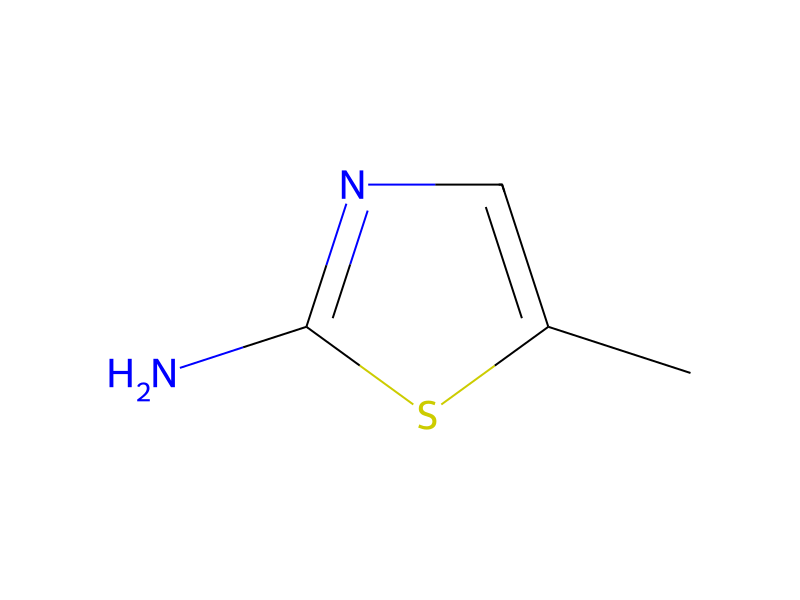
HCID 31268PyrrolidineHCID 682631,1'-CarbonyldiimidazoleHCID 3517702-Amino-5-methylthiazole

Produkt 1

HCID 47197229N-(5-methyl-1,3-thiazol-2-yl)pyrrolidine-1-carboxamide

Reagenzien, Katalysatoren, Lösungsmittel 2

HCID 142844-(Dimethylamino)pyridineKatalysator
HCID 8028
Tetrahydrofuran
Lösungsmittel

Versuchsvorschrift

A solution of 5-methylthiazol-2-amine (4.8 g, 42 mmol), N,N-carbonyldiimidazole (9.8 g, 61 mmol), and 4-dimethylaminopyridine (0.1 g, 1.0 mmol) in tetrahydrofuran (90 mL) was heated at 65° C. for 6 hours. Pyrrolidine (5.1 mL, 61 mmol) was then added and heating was continued at 65° C. for 48 hours. The mixture was concentrated, and the residue was diluted with methanol and then triturated with diethyl ether. The solids were collected by filtration, washed with diethyl ether, and recrystallized from ethyl acetate to give the title compound.

Aufarbeitung

  1. temperatureheating
  2. concentrationThe mixture was concentrated
  3. additionthe residue was diluted with methanol
  4. customtriturated with diethyl ether
  5. filtrationThe solids were collected by filtration
  6. washwashed with diethyl ether
  7. customrecrystallized from ethyl acetate

Quellen und Nachweise

ORD-Eintrag
ord-e7cbf7636c64439a8eafa7d98b00f189
Quelldatensatz
uspto-grants-2013_02
DOI
10.6084/m9.figshare.5104873.v1
Patentnummer
US08383657B2

Notizen zur Reaktion

Auf dieser SeiteKomponentenVersuchsvorschriftAufarbeitungQuellen und NachweiseNotizen zur Reaktion