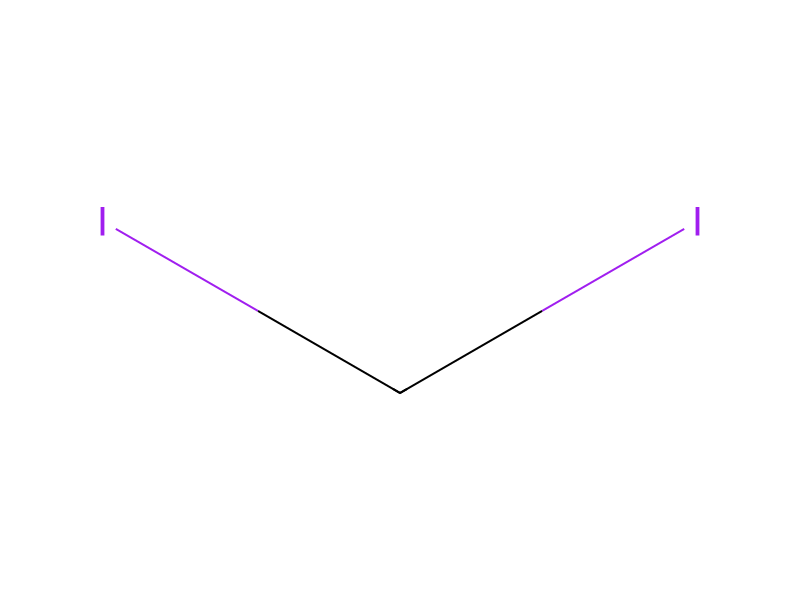
[CH3:1][C:2]1([CH3:17])[CH2:11][C:10](=[CH2:12])[C:9]2[C:4](=[CH:5][CH:6]=[C:7]([C:13]([O:15][CH3:16])=[O:14])[CH:8]=2)[O:3]1.[CH2:18]([Zn]CC)C.ICI>C1(C)C=CC=CC=1>[CH3:1][C:2]1([CH3:17])[CH2:11][C:10]2([CH2:18][CH2:12]2)[C:9]2[C:4](=[CH:5][CH:6]=[C:7]([C:13]([O:15][CH3:16])=[O:14])[CH:8]=2)[O:3]1To a mixture of methyl 2,2-dimethyl-4-methylidene-3,4-dihydro-2H-chromene-6-carboxylate (34.0 mg, 0.15 mmol) and diethylzinc (1.17 mL, 1.17 mmol) in toluene (2.90 mL) under N2 atmosphere was added diiodomethane (189 μL, 2.34 mmol) dropwise via a syringe at room temperature. The mixture was stirred at room temperature overnight and then partitioned between diethyl ether (10.0 mL) and 5% aqueous HCl (10.0 mL). The aqueous layer was extracted with diethyl ether (20.0 mL, 2×). The combined organic layers were dried over Na2SO4, filtered and concentrated under vacuum. The crude residue was purified by silica gel chromatography eluting with 0-15% EtOAc/hexanes to afford the desired product as a pale-yellow solid.