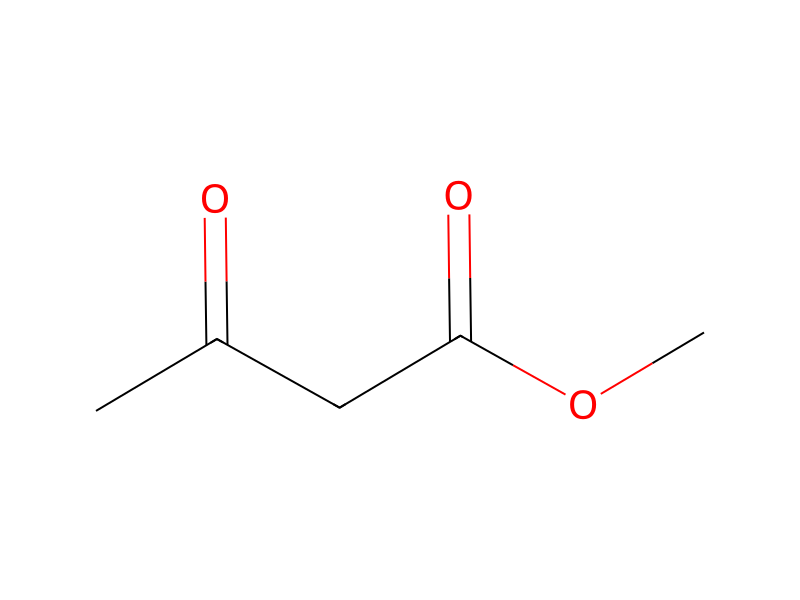
In a dried flask, a solution of methyl acetoacetate (2.16 mL, 20.0 mmol) in toluene (100 mL) was treated with sodium hydride (60% mineral oil dispersion, 880 mg, 22.0 mmol). The resulting mixture was stirred at rt for 10 min, and then a solution of 2-fluorobenzoyl chloride (2.23 mL, 20.0 mmol) in toluene (50 mL) was added over about a 1 min. period. The resulting mixture was heated at reflux for 24.5 h, and then poured into water (200 mL). The mixture was extracted twice with ether (50 mL each). The combined organic phases were dried over sodium sulfate and concentrated under vacuum to provide a viscous yellow oil, which crystallized. The solid was recrystallized from a ethyl acetate/hexane solution to provide methyl 2-methyl-4-oxo-4H-chromene-3-carboxylate as off-white crystals in two crops (2.10 g, 48%). 1H NMR (400 MHz, CDCl3) δ ppm 2.53 (s, 3 H) 3.94 (s, 3 H) 7.42 (m, 2 H) 7.67 (ddd, J=8.5, 7.0, 1.8 Hz, 1 H) 8.21 (dd, J=7.9, 1.8 Hz, 1 H).