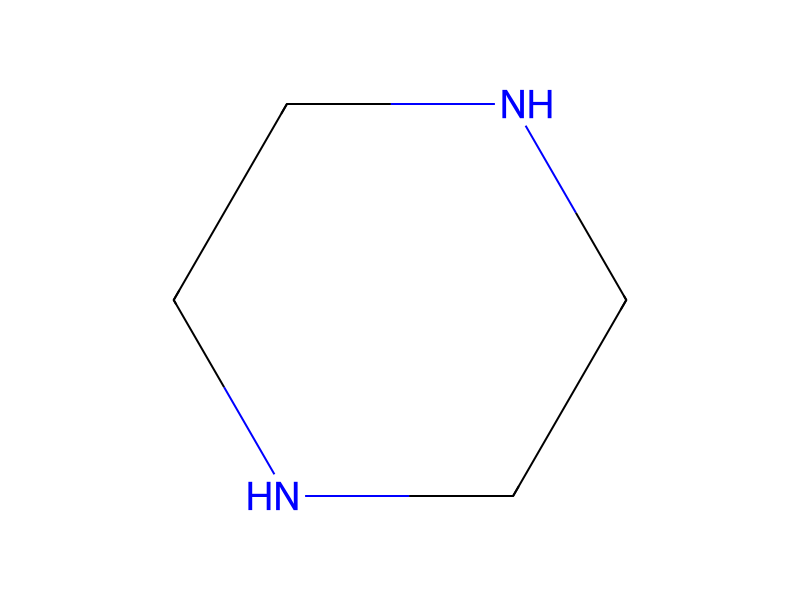
[CH2:1]([O:3][C:4]([C:6]1[CH:11]=[C:10](Br)[CH:9]=[C:8]([C:13]([O:15][CH2:16][CH3:17])=[O:14])[N:7]=1)=[O:5])[CH3:2].[NH:18]1[CH2:23][CH2:22][NH:21][CH2:20][CH2:19]1>O1CCOCC1>[OH-:3].[NH4+:7].[CH2:1]([O:3][C:4]([C:6]1[CH:11]=[C:10]([N:18]2[CH2:23][CH2:22][NH:21][CH2:20][CH2:19]2)[CH:9]=[C:8]([C:13]([O:15][CH2:16][CH3:17])=[O:14])[N:7]=1)=[O:5])[CH3:2]A mixture of diethyl 4-bromopyridine-2,6-dicarboxylate (Example 44) (3.02 g, 10.0 mmol) and piperazine (Aldrich, 4.3 g, 50 mmol) in dioxane (200 mL) was refluxed for 24 hours. The precipitate was filtered off and the filtrate was concentrated under vacuum. The residue was dissolved in ethyl acetate and washed four times with brine. The organic solution was dried (Na2SO4) and the solvent was evaporated. The residue was purified by flash chromatography on a silica gel column (22 cm×3 cm). Elution with methanol and then methanol:30% ammonium hydroxide (100:1, 50:1, and 20:1, v/v) gave 3.05 g (99%) of the title compound as a pale yellow foam.