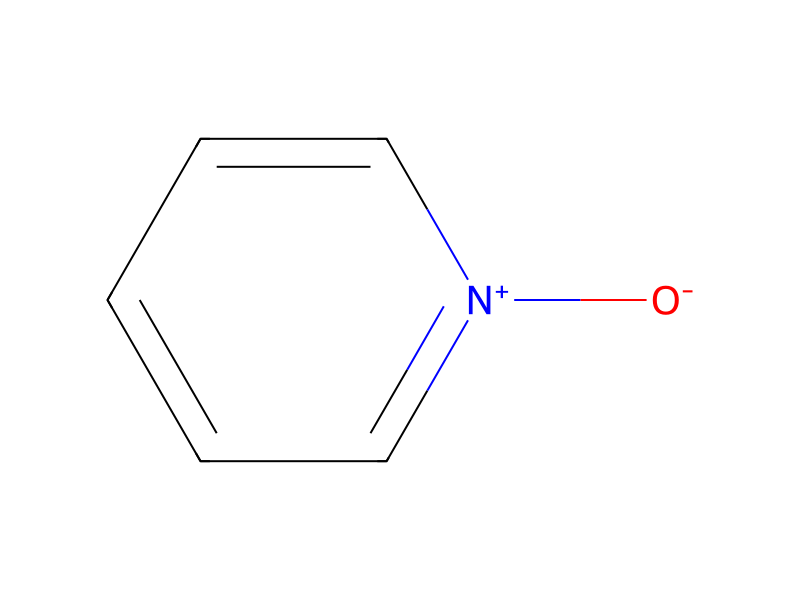
Pyridine N-Oxide → HCID 13961163, Verbindung
HRID 414187
Reaktionsgleichung

[CH3:1][C:2]1[C:12]([CH3:13])=[CH:11][C:5]2[N:6]=[C:7]([CH2:9][SH:10])[NH:8][C:4]=2[CH:3]=1.[N+:14]1([O-])[CH:19]=[CH:18][CH:17]=[CH:16][CH:15]=1>C(OC(=O)C)(=O)C>[CH3:13][C:12]1[C:2]([CH3:1])=[CH:3][C:4]2[N:8]=[C:7]([CH2:9][S:10][C:15]3[CH:16]=[CH:17][CH:18]=[CH:19][N:14]=3)[NH:6][C:5]=2[CH:11]=1Komponenten
4
Edukt 2

Produkt 1

Reagenzien, Katalysatoren, Lösungsmittel 1

Versuchsvorschrift
A solution of 3.84 g (0.02 mole) of 5,6-dimethyl-2-mercaptomethylbenzimidazole and 1.9 g (0.02 mole) of pyridine N-oxide in 50 ml of acetic anhydride is heated to 100° C. for 4 hours. The acetic anhydride is evaporated off, the residue taken up with acetone and the mixture filtered and concentrated to a volume of 20 ml. From this solution, 2.6 g (48%) of 5,6-dimethyl-2-(2-pyridylthiomethyl)benzimidazole crystallize. The product thereby obtained is identical to that obtained by Method A, and the data for the identification appear in Tables 1 and 2.