StartseiteMCPWorkbenchSkills
StartseiteWorkbenchBenachrichtigungenMein Bereich
llms.txt · MCP-AnleitungDatenschutz · Nutzungsbedingungen · Supportv1.8.0
  1. Startseite
  2. /Reaktion

Phosgene → Methyl 2-(isocyanatosulfonyl)-4-(methylthio)benzoate

HRID 4155
Notizen
Druckvorschau

Reaktionsgleichung

Reaktionsgleichung von HRID 4155
[NH2:1][S:2]([C:5]1[CH:14]=[C:13]([S:15][CH3:16])[CH:12]=[CH:11][C:6]=1[C:7]([O:9][CH3:10])=[O:8])(=[O:4])=[O:3].C(N=[C:22]=[O:23])CCC.C(Cl)(Cl)=O>>[N:1]([S:2]([C:5]1[CH:14]=[C:13]([S:15][CH3:16])[CH:12]=[CH:11][C:6]=1[C:7]([O:9][CH3:10])=[O:8])(=[O:4])=[O:3])=[C:22]=[O:23]
KomponentenVersuchsvorschriftAufarbeitungQuellen und NachweiseNotizen zur Reaktion

Komponenten

4

Edukt 3

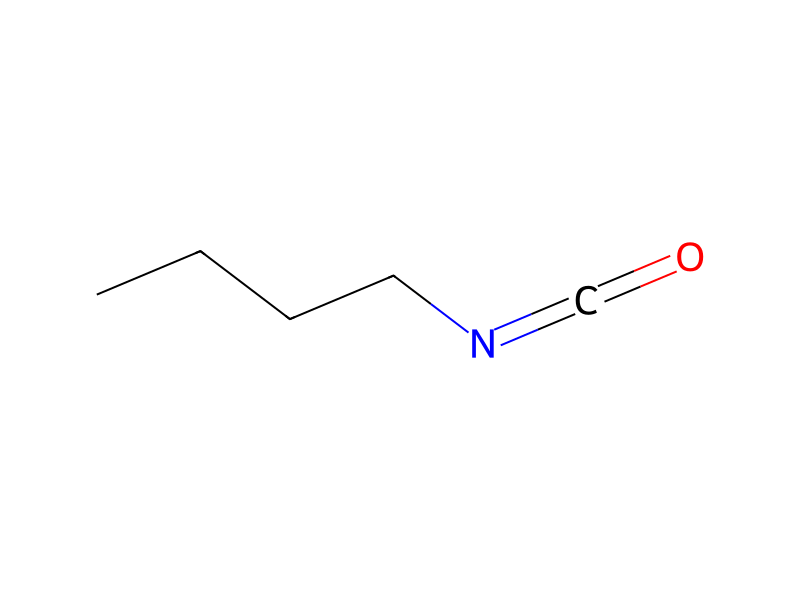
HCID 6371PhosgeneHCID 8110Butyl isocyanateHCID 13988046Methyl 2-(aminosulfonyl)-4-(methylthio)benzoate

Produkt 1

HCID 14748707Methyl 2-(isocyanatosulfonyl)-4-(methylthio)benzoateAusbeute 111,4 %

Versuchsvorschrift

A solution of methyl 2-(aminosulfonyl)-4-(methylthio)benzoate (5.23 g, 20.0 mmol), n-butyl isocyanate (2.25 mL, 20.0 mmol), and 1,4-diaza[2.2.2]bicyclooctane (0.09 g, 0.8 mmol) in mixed xylenes (50 mL) was heated at reflux for 10 minutes. Phosgene was then added at such a rate that the internal temperature stayed at 133° C. or above. When consumption of phosgene ceased, the solution was cooled to room temperature and then filtered under nitrogen. Rotary evaporation gave methyl 2-(isocyanatosulfonyl)-4-(methylthio)benzoate as a yellow oil (6.4 g). This was used immediately without further purification or characterization.

Aufarbeitung

  1. temperatureat reflux for 10 minutes
  2. customstayed at 133° C. or above
  3. customWhen consumption of phosgene
  4. filtrationfiltered under nitrogen
  5. customRotary evaporation

Quellen und Nachweise

ORD-Eintrag
ord-2b6185ff48f74872a4d4707ac892d99d
Quelldatensatz
uspto-grants-1988_02
DOI
10.6084/m9.figshare.5104873.v1
Patentnummer
US04724039

Notizen zur Reaktion

Wird geladen…

Auf dieser SeiteKomponentenVersuchsvorschriftAufarbeitungQuellen und NachweiseNotizen zur Reaktion