StartseiteMCPWorkbenchSkills
StartseiteWorkbenchBenachrichtigungenMein Bereich
llms.txt · MCP-AnleitungDatenschutz · Nutzungsbedingungen · Supportv1.8.3
  1. Startseite
  2. /Reaktion

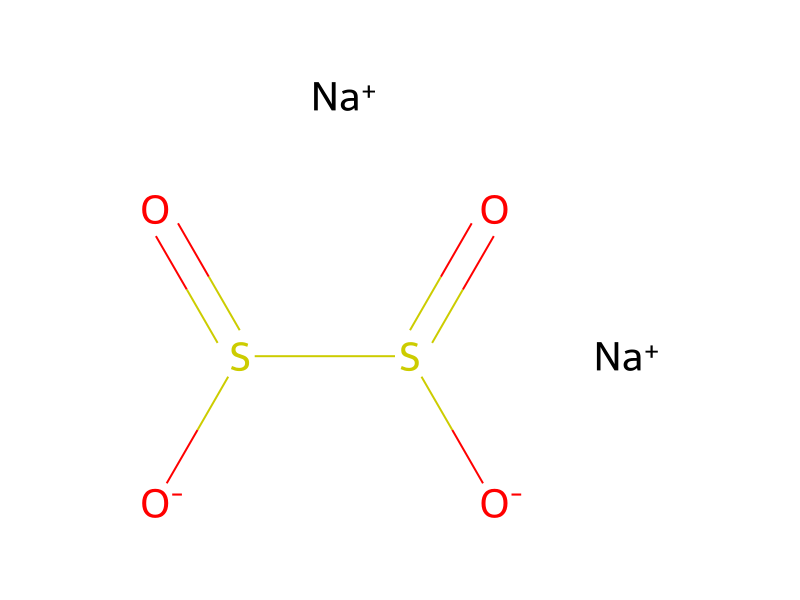
Sodium Dithionite → HCID 178436052, Verbindung

HRID 416799
Drucken

Reaktionsgleichung

Reaktionsgleichung von HRID 416799
[Br:1][C:2]1[C:3]([N:12]2[CH2:17][CH2:16][N:15]([CH:18]([C:20]3[CH:25]=[CH:24][CH:23]=[CH:22][CH:21]=3)[CH3:19])[CH2:14][CH2:13]2)=[C:4]([N+:9]([O-])=O)[C:5]([NH2:8])=[N:6][CH:7]=1.[N:26]1([CH2:32][C:33]2[CH:40]=[CH:39][C:36]([CH:37]=O)=[CH:35][CH:34]=2)[CH2:31][CH2:30][O:29][CH2:28][CH2:27]1.[O-]S(S([O-])=O)=O.[Na+].[Na+]>CCO>[Br:1][C:2]1[C:3]([N:12]2[CH2:17][CH2:16][N:15]([CH:18]([C:20]3[CH:25]=[CH:24][CH:23]=[CH:22][CH:21]=3)[CH3:19])[CH2:14][CH2:13]2)=[C:4]2[N:9]=[C:37]([C:36]3[CH:35]=[CH:34][C:33]([CH2:32][N:26]4[CH2:31][CH2:30][O:29][CH2:28][CH2:27]4)=[CH:40][CH:39]=3)[NH:8][C:5]2=[N:6][CH:7]=1
KomponentenReaktionsbedingungenVersuchsvorschriftAufarbeitungQuellen und NachweiseNotizen zur Reaktion

Komponenten

5

Edukt 3

HCID 24489Sodium DithioniteHCID 27954984-[(Morpholin-4-yl)methyl]benzaldehydeHCID 578973125-Bromo-3-nitro-4-(4-(1-phenylethyl)piperazin-1-yl)pyridin-2-amine

Produkt 1

HCID 178436052HCID 178436052, Verbindung

Reagenzien, Katalysatoren, Lösungsmittel 1

HCID 702EthanolLösungsmittel

Reaktionsbedingungen

Temperatur
70 °C

Versuchsvorschrift

To a mixture of 5-bromo-3-nitro-4-[4-(1-phenyl-ethyl)-piperazin-1-yl]-pyridin-2-ylamine (0.060 g, 0.15 mmol) and EtOH (6.0 ml) was added 4-morpholin-4-ylmethyl-benzaldehyde (0.039 g, 0.19 mmol) followed by a freshly prepared aqueous solution of Na2S2O4 (1M; 0.60 ml, 0.60 mmol). The reaction mixture was stirred at 70° C. for 5 h, then allowed to cool to room temperature, and concentrated in vacuo. The residue was absorbed on silica gel, the free-running powder was placed on a 10 g isolute silica column and elution with a gradient of methanol (0 to 9%) in ethyl acetate/dichloromethane (v:v; 1:1) afforded a yellow solid which was triturated with diethyl ether. The precipitate was collected by filtration, successively washed with diethyl ether, water, diethyl ether, and dried (0.002 g, 3%). 1H-NMR (500 MHz, DMSO-d6) 1.37 (d, J=6.6 Hz, 3H, CHCH3), 2.38 (br s, 4H) and 3.59 (t, J=4.6 Hz, 4H) (morpholine N(CH2)2 and morpholine O(CH2)2), 2.54 (br s, 2H), 2.63 (br s, 2H) and 3.65 (br s, 4H) piperazine N(CH2)2), 3.50 (q, 1H, CHCH3), 3.57 (s, 2H, C6H4CH2), 7.26 (m, 1H) and 7.37 (m, 4H) (PhH), 7.47 (d, J=8.9 Hz, 2H) and 8.13 (d, J=8.2 Hz, 2H) (3,5-C6H4— and 2,6-C6H4—), 8.22 (s, 1H, imidazo[4,5-b]pyridine 5-H), 13.45 (br s, 1H, imidazo[4,5-b]pyridine N—H);

Aufarbeitung

  1. temperatureto cool to room temperature
  2. concentrationconcentrated in vacuo
  3. customThe residue was absorbed on silica gel
  4. washthe free-running powder was placed on a 10 g isolute silica column and elution with a gradient of methanol (0 to 9%) in ethyl acetate/dichloromethane (v:v; 1:1)
  5. customafforded a yellow solid which
  6. customwas triturated with diethyl ether
  7. filtrationThe precipitate was collected by filtration
  8. washsuccessively washed with diethyl ether, water, diethyl ether
  9. customdried (0.002 g, 3%)

Quellen und Nachweise

ORD-Eintrag
ord-6985305c60c149c8ae2199afcf73b104
Quelldatensatz
uspto-grants-2012_01
DOI
10.6084/m9.figshare.5104873.v1
Patentnummer
US08088761B2

Notizen zur Reaktion

Auf dieser SeiteKomponentenReaktionsbedingungenVersuchsvorschriftAufarbeitungQuellen und NachweiseNotizen zur Reaktion