Diisopropylethylamine → (2S,4R)-tert-butyl 2-(N-(hex-5-enyl)-N-methyl-carbamoyl)-4-hydroxypyrrolidine-1-carboxylate
HRID 420045
Reaktionsgleichung

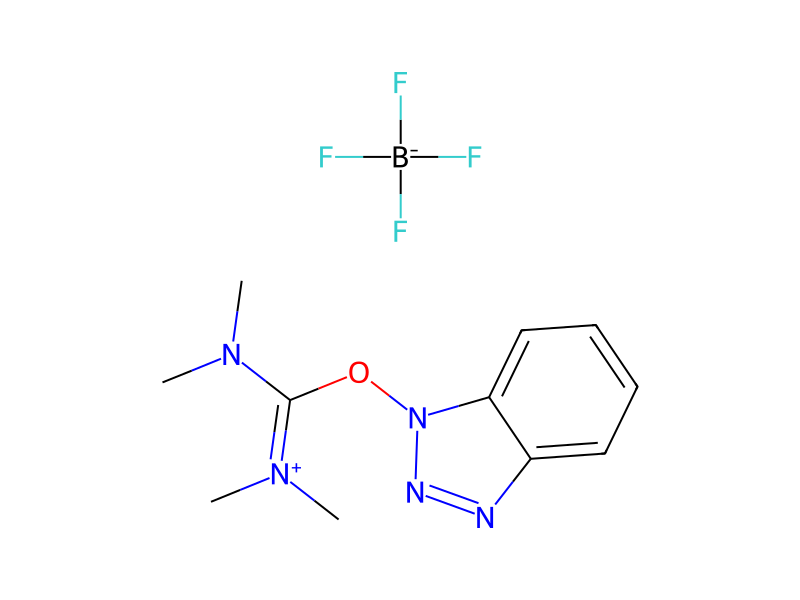
[C:1]([N:8]1[CH2:15][C@@H:14]([OH:16])[CH2:13][C@H:9]1[C:10]([OH:12])=O)([O:3][C:4]([CH3:7])([CH3:6])[CH3:5])=[O:2].F[B-](F)(F)F.N1(OC(N(C)C)=[N+](C)C)C2C=CC=CC=2N=N1.S(C1C=CC(C)=CC=1)(O)(=O)=O.[CH3:50][NH:51][CH2:52][CH2:53][CH2:54][CH2:55][CH:56]=[CH2:57].CCN(C(C)C)C(C)C>CN(C=O)C>[CH2:52]([N:51]([CH3:50])[C:10]([C@@H:9]1[CH2:13][C@@H:14]([OH:16])[CH2:15][N:8]1[C:1]([O:3][C:4]([CH3:5])([CH3:6])[CH3:7])=[O:2])=[O:12])[CH2:53][CH2:54][CH2:55][CH:56]=[CH2:57]