StartseiteMCPWorkbenchSkills
StartseiteWorkbenchBenachrichtigungenMein Bereich
llms.txt · MCP-AnleitungDatenschutz · Nutzungsbedingungen · Supportv1.8.3
  1. Startseite
  2. /Reaktion

Potassium Fluoride → Mk-8033

HRID 421747
Drucken

Reaktionsgleichung

Reaktionsgleichung von HRID 421747
Cl[C:2]1[CH:3]=[C:4]2[C:12](=[O:13])[C:11]3[CH:14]=[C:15]([CH2:18][S:19]([NH:22][CH2:23][C:24]4[CH:29]=[CH:28][CH:27]=[CH:26][N:25]=4)(=[O:21])=[O:20])[CH:16]=[CH:17][C:10]=3[CH:9]=[CH:8][C:5]2=[N:6][CH:7]=1.[CH3:30][N:31]1[CH:35]=[C:34](B2OC(C)(C)C(C)(C)O2)[CH:33]=[N:32]1.[F-].[K+].F[B-](F)(F)F.C([PH+](C(C)(C)C)C(C)(C)C)(C)(C)C>C1C=CC(/C=C/C(/C=C/C2C=CC=CC=2)=O)=CC=1.C1C=CC(/C=C/C(/C=C/C2C=CC=CC=2)=O)=CC=1.C1C=CC(/C=C/C(/C=C/C2C=CC=CC=2)=O)=CC=1.[Pd].[Pd].CN(C=O)C>[CH3:30][N:31]1[CH:35]=[C:34]([C:2]2[CH:3]=[C:4]3[C:12](=[O:13])[C:11]4[CH:14]=[C:15]([CH2:18][S:19]([NH:22][CH2:23][C:24]5[CH:29]=[CH:28][CH:27]=[CH:26][N:25]=5)(=[O:21])=[O:20])[CH:16]=[CH:17][C:10]=4[CH:9]=[CH:8][C:5]3=[N:6][CH:7]=2)[CH:33]=[N:32]1
KomponentenReaktionsbedingungenVersuchsvorschriftAufarbeitungQuellen und NachweiseNotizen zur Reaktion

Komponenten

7

Edukt 4

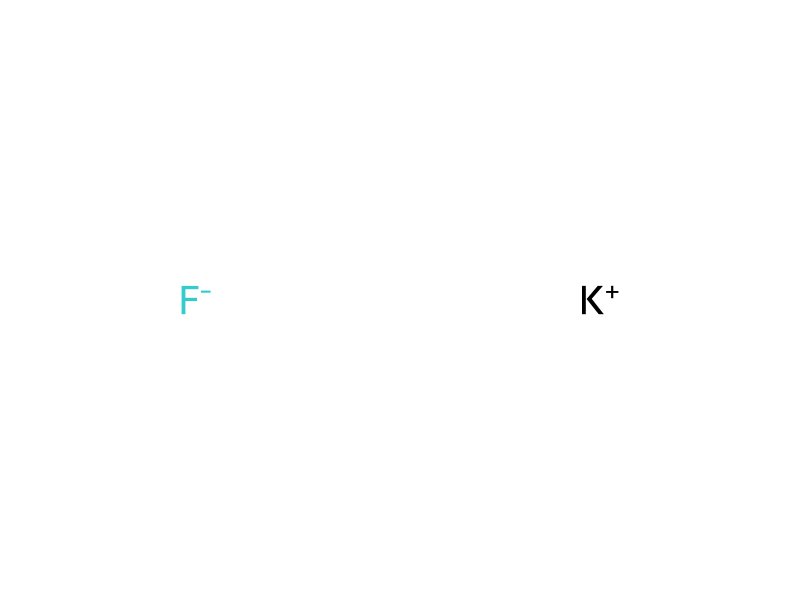
HCID 522689Potassium FluorideHCID 2734635Tri-tert-butylphosphine tetrafluoroborateHCID 27739871-Methyl-4-(4,4,5,5-tetramethyl-1,3,2-dioxaborolan-2-yl)-1H-pyrazoleHCID 575412621-(3-Chloro-5-oxo-5H-benzo[4,5]cyclohepta[1,2-b]pyridin-7-yl)-N-(pyridin-2-ylmethyl)methanesulfonamide

Produkt 1

HCID 45142457Mk-8033

Reagenzien, Katalysatoren, Lösungsmittel 2

HCID 9811564Bis(dibenzylideneacetone)palladiumKatalysatorHCID 6228DimethylformamideLösungsmittel

Reaktionsbedingungen

Temperatur
130 °C

Versuchsvorschrift

1-(3-Chloro-5-oxo-5H-benzo[4,5]cyclohepta[1,2-b]pyridin-7-yl)-N-(pyridin-2-ylmethyl)methanesulfonamide (31.0 g, 72.8 mmol), 1-methyl-4-(4,4,5,5-tetramethyl-1,3,2-dioxaborolan-2-yl)-1H pyrazole (22.72 g, 109 mmol), potassium fluoride (13.96 g, 240 mmol), tri-t-butylphosphonium tetrafluoroborate (2.112 g, 7.28 mmol), and Pd2(dba)3 (3.33 g, 3.64 mmol) were placed in a flask under an atmosphere of argon. DMF (364 ml) was added and argon was bubbled through the solution for several minutes. The solution was then heated at 130° C. for 6 h. The mixture was then cooled to room temperature, aqueous sodium hydrogen carbonate (saturated, 2000 mL) was added and the mixture was extracted with ethyl acetate (10×500 mL). The combined organic fractions were dried (anhydrous Na2SO4), filtered and concentrated under reduced pressure. The residue was purified by preparative HPLC Reverse phase (C-18), eluting with Acetonitrile/Water+0.05% TFA to afford the title compound as a pale yellow solid. 1H NMR (600 MHz, DMSO-D6) δ 9.21 (d, 1H); 8.53 (d, 1H); 8.47 (m, 1H); 8.46 (m, 1H); 8.15 (d, 1H); 8.14 (s, 1H); 7.78 (m, 4H); 7.39 (m, 2H); 7.32 (d, 1H); 7.24 (m, 1H); 4.63 (s, 2H); 4.22 (d, 1H); 3.88 (s, 3H). LRMS (APCI) calculated for C25H21N5O3S [M+H]+, 472.1; found 472.1.

Aufarbeitung

  1. customargon was bubbled through the solution for several minutes
  2. temperatureThe mixture was then cooled to room temperature
  3. additionaqueous sodium hydrogen carbonate (saturated, 2000 mL) was added
  4. extractionthe mixture was extracted with ethyl acetate (10×500 mL)
  5. dry with materialThe combined organic fractions were dried (anhydrous Na2SO4)
  6. filtrationfiltered
  7. concentrationconcentrated under reduced pressure
  8. customThe residue was purified by preparative HPLC Reverse phase (C-18)
  9. washeluting with Acetonitrile/Water+0.05% TFA

Quellen und Nachweise

ORD-Eintrag
ord-6f927f189af24d8898d469d45edcd890
Quelldatensatz
uspto-grants-2012_01
DOI
10.6084/m9.figshare.5104873.v1
Patentnummer
US08101603B2

Notizen zur Reaktion

Auf dieser SeiteKomponentenReaktionsbedingungenVersuchsvorschriftAufarbeitungQuellen und NachweiseNotizen zur Reaktion