Reaktionsgleichung

[CH3:1][CH:2]([C:4]1[N:8]=[C:7]([N:9]2[CH2:14][CH2:13][CH:12]([CH2:15][OH:16])[CH2:11][CH2:10]2)[O:6][N:5]=1)[CH3:3].[Br:17][C:18]1[N:23]=[CH:22][C:21](O)=[CH:20][CH:19]=1.C1C=CC(P(C2C=CC=CC=2)C2C=CC=CC=2)=CC=1.N(C(OC(C)C)=O)=NC(OC(C)C)=O>C1COCC1>[Br:17][C:18]1[CH:19]=[CH:20][C:21]([O:16][CH2:15][CH:12]2[CH2:13][CH2:14][N:9]([C:7]3[O:6][N:5]=[C:4]([CH:2]([CH3:1])[CH3:3])[N:8]=3)[CH2:10][CH2:11]2)=[CH:22][N:23]=1Komponenten
Edukt 4


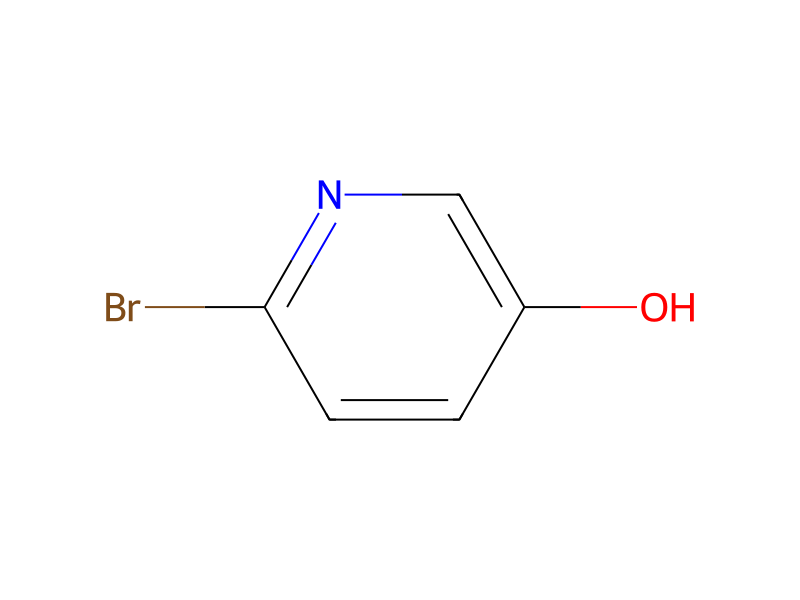

Produkt 1

Reagenzien, Katalysatoren, Lösungsmittel 1

Versuchsvorschrift
Alternative preparation: Step 1: 2-Bromo-5-[({1-[3-(1-methylethyl)-1,2,4-oxadiazol-5-yl]-4-piperidinyl}methyl)oxy]pyridine (220 mg, 29%) was prepared as a white solid from {1-[3-(1-methylethyl)-1,2,4-oxadiazol-5-yl]-4-piperidinyl}methanol (prepared as in Example 20, Steps 1-3, 348 mg, 2.0 mmol), 6-bromo-3-pyridinol (348 mg, 2.0 mmol) and Ph3P (629 mg, 2.4 mmol) in THF (5 mL) followed by diisopropyl azodicarboxylate (0.51 mL, 2.6 mmol) in a manner similar to Example 1, Step 2. 1H NMR (400 MHz, CDCl3): δ 8.04 (s, 1H), 7.37 (d, 1H, J=8.8 Hz), 7.08 (d, 1H, J=8.8 Hz), 4.26-4.16 (m, 2H), 3.85 (d, 2H, J=6.2 Hz), 3.14-3.04 (m, 2H), 2.95-2.76 (m, 1H), 2.11-1.96 (m, 1H), 1.98-1.88 (m, 2H), 1.52-1.36 (m, 2H), 1.28 (d, 6H, J=6.9 Hz); LRMS (ESI), m/z 381/383 (M+H).
Aufarbeitung
- customAlternative preparation
Quellen und Nachweise
- ORD-Eintrag
- ord-b4945f894620461db2490745c87e42dd
- Quelldatensatz
- uspto-grants-2012_01
- Patentnummer
- US08101634B2
Verknüpfte Notizen
Wird geladen…