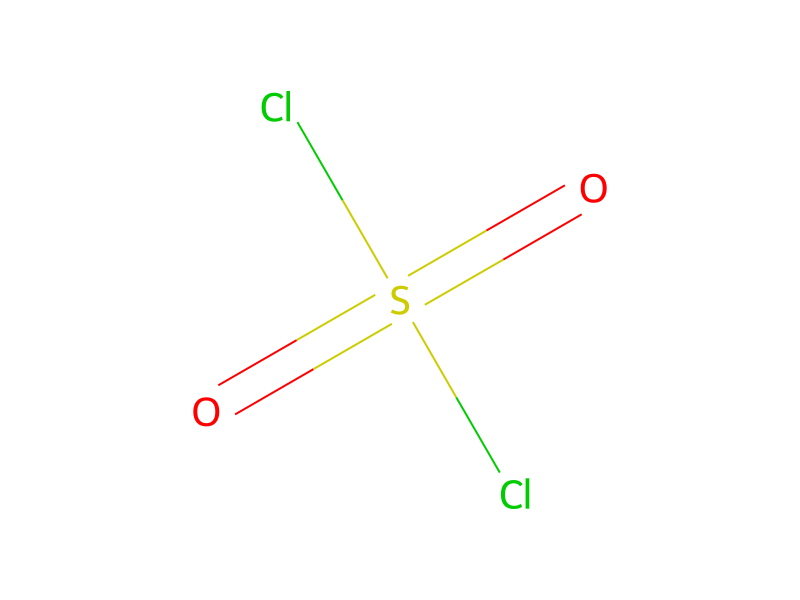
Sulfuryl chloride → HCID 18352666, Verbindung
Reaktionsgleichung

[CH3:1][C:2]1[CH:7]=[CH:6][CH:5]=[CH:4][C:3]=1[CH:8]1[CH2:13][CH2:12][C:11](=[O:14])[CH2:10][CH2:9]1.S(Cl)([Cl:18])(=O)=O.C(=O)(O)[O-].[Na+]>C(Cl)Cl>[Cl:18][CH:10]1[CH2:9][CH:8]([C:3]2[CH:4]=[CH:5][CH:6]=[CH:7][C:2]=2[CH3:1])[CH2:13][CH2:12][C:11]1=[O:14]Komponenten
5
Edukt 3


Produkt 1

Reagenzien, Katalysatoren, Lösungsmittel 1

Versuchsvorschrift
Prepared in analogy with a method in Hussey, A. S. and Herr, R. R., J. Org. Chem., 24, 843 (1959). To a 500 mL round-bottomed flask equipped with nitrogen inlet was added 33.3 grams (0.177 mol) of 4-(2-methylphenyl)cyclohexanone and 200 mL methylene chloride. To the stirring solution was added drop wise over 30 minutes a solution of 17.1 mL (0.212 mol) sulfuryl chloride in 10 mL methylene chloride. The reaction was stirred 14 hours at room temperature and poured into saturated aqueous sodium bicarbonate solution. The organic layer was separated, washed again with saturated aqueous sodium bicarbonate solution, dried over sodium sulfate, and evaporated to a yellow oil, 41 grams (100%), as a mixture of diastereomers which was used directly in the next step.