Oleic Acid → Zinc Oleate
HRID 431412
Reaktionsgleichung

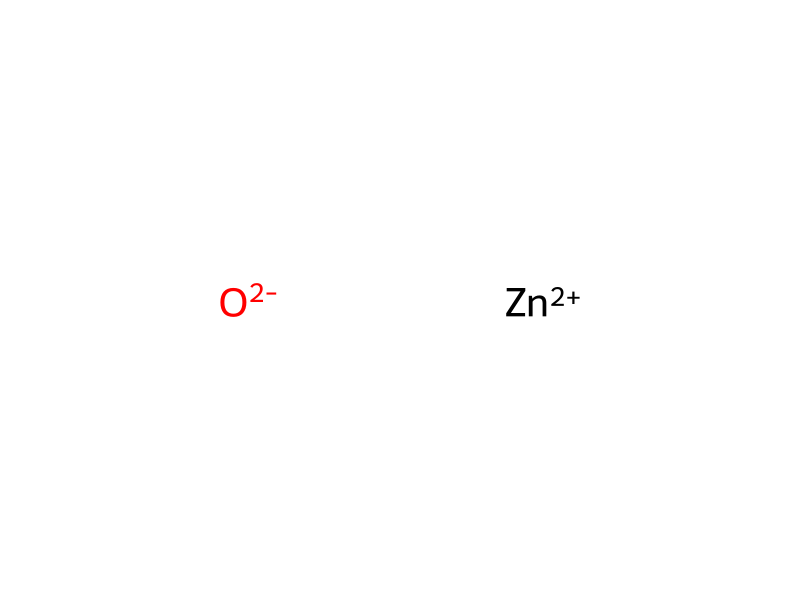
[O-2].[Zn+2:2].[C:3]([OH:22])(=[O:21])[CH2:4][CH2:5][CH2:6][CH2:7][CH2:8][CH2:9][CH2:10]/[CH:11]=[CH:12]\[CH2:13][CH2:14][CH2:15][CH2:16][CH2:17][CH2:18][CH2:19][CH3:20]>>[C:3]([O-:22])(=[O:21])[CH2:4][CH2:5][CH2:6][CH2:7][CH2:8][CH2:9][CH2:10]/[CH:11]=[CH:12]\[CH2:13][CH2:14][CH2:15][CH2:16][CH2:17][CH2:18][CH2:19][CH3:20].[Zn+2:2].[C:3]([O-:22])(=[O:21])[CH2:4][CH2:5][CH2:6][CH2:7][CH2:8][CH2:9][CH2:10]/[CH:11]=[CH:12]\[CH2:13][CH2:14][CH2:15][CH2:16][CH2:17][CH2:18][CH2:19][CH3:20]Komponenten
3


Versuchsvorschrift
The chemical reactivity of the ultrafine zinc oxide particles obtained in Examples 1 to 3 and Comparative Examples 1 and 2 to fatty acids was examined. Three grams of ultrafine zinc oxide particles were mixed with 27 g of oleic acid (special chemical grade available from Kanto Kagaku K.K.) at room temperature to prepare a suspension. The suspension was put in a warm air chamber maintained at a temperature of 120° C. so that zinc oxide was allowed to react with oleic acid (having a melting point of 24° C.) to form zinc oleate (having a melting point of 78° C.) and the suspension was observed whether the reaction in fact took place at a temperature of 120° C.
Aufarbeitung
- custom