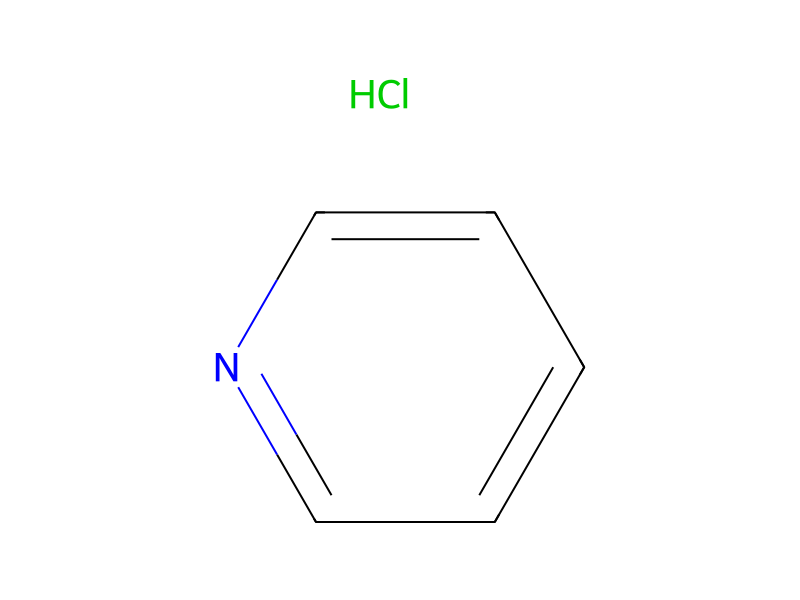
Pyridinium chloride → 2-hexyl-1-[5-(methylthio)pentyl]-1H-imidazo[4,5-c]quinoline
HRID 432847
Reaktionsgleichung

[CH3:1][S:2][CH2:3][CH2:4][CH2:5][CH2:6][CH2:7][NH:8][C:9]1[C:18]2[C:13](=[CH:14][CH:15]=[CH:16][CH:17]=2)[N:12]=[CH:11][C:10]=1[NH:19][C:20](=O)[CH2:21][CH2:22][CH2:23][CH2:24][CH2:25][CH3:26].Cl.N1C=CC=CC=1>N1C=CC=CC=1>[CH2:21]([C:20]1[N:8]([CH2:7][CH2:6][CH2:5][CH2:4][CH2:3][S:2][CH3:1])[C:9]2[C:18]3[CH:17]=[CH:16][CH:15]=[CH:14][C:13]=3[N:12]=[CH:11][C:10]=2[N:19]=1)[CH2:22][CH2:23][CH2:24][CH2:25][CH3:26]Komponenten
4
Edukt 2

Produkt 1

Reagenzien, Katalysatoren, Lösungsmittel 1

Versuchsvorschrift
A round bottom flask was charged with a magnetic stir bar, N-(4-{[-(methylthio)pentyl]amino}quinolin-3-yl)heptanamide (4.44 g, 11.46 mmol), pyridine hydrochloride (0.13 g, 1.15 mmol), and anhydrous pyridine (50 mL) under a nitrogen atmosphere. The reaction was judged to be complete after stirring at reflux for 1.5 hours. The solution was cooled and partitioned between ethyl acetate and water. The layers were separated. The organic layer was washed with saturated aqueous sodium bicarbonate and brine, dried over anhydrous sodium sulfate, filtered and then concentrated under reduced pressure to afford 2-hexyl-1-[5-(methylthio)pentyl]-1H-imidazo[4,5-c]quinoline (4.0 g, 10.82 mmol) as a brown oil which was used without further purification.