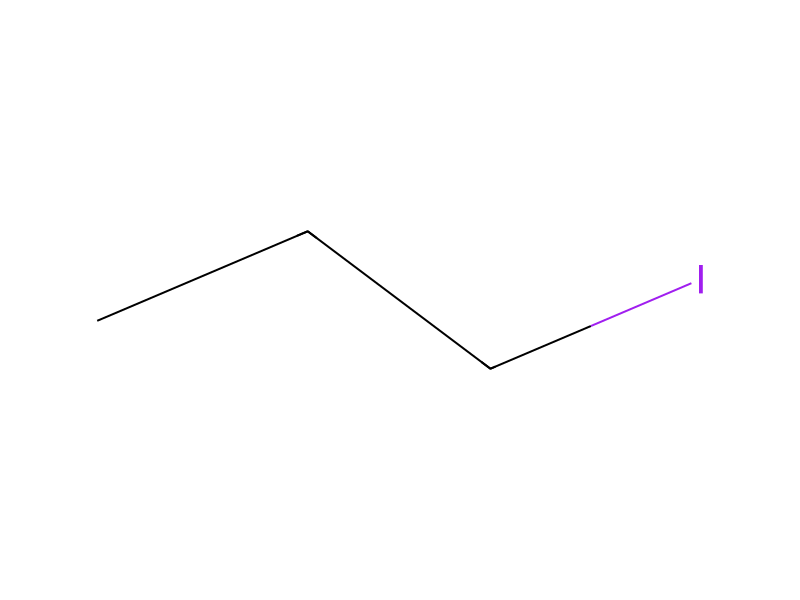
A mixture of 2,7-dimethyl-1,2,3,4-tetrahydroquinoline (32.2 g, 0.2 m), potassium carbonate (15.0 g, 0.11 m), and 2-iodopropane (51 g, 0.3 m) was heated at 90°-95° C. for 5.5 hr. Progress of the reaction was slow. An additional quantity (34.0 g) of iodopropane was added and the mixture refluxed for 24 hrs. longer. Starting material was still evident by thin-layer chromatography. The reaction mixture was drowned into 200 ml water and extracted with chloroform (50 ml). The organic layer was treated with 10 ml of acetic anhydride for 1 hr. at 90°-95° C. to convert the 2,7-dimethyl-1,2,3,4-tetrahydroquinoline into N-acetyl-2,7-dimethyl-1,2,3,4-tetrahydroquinoline, which enables the recovery of the pure product by distillation. The organic layer was distilled under vacuum to give 23.4 g (55% yield) of product which boiled at 85° C. at 0.21.1 mm Hg.