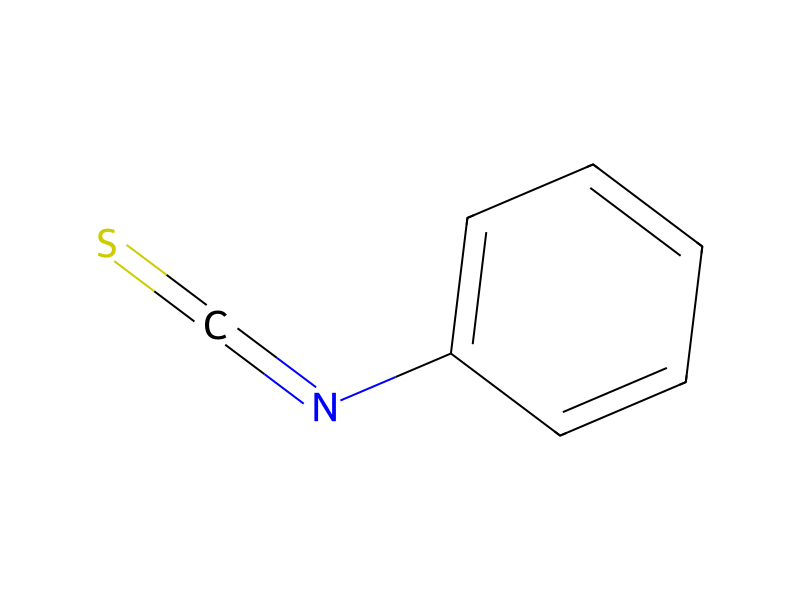
Phenyl Isothiocyanate → HCID 21427813, Verbindung
HRID 437299
Reaktionsgleichung

[NH2:1][C:2]1[CH:7]=[CH:6][C:5]([NH:8][NH:9][C:10](=[O:15])[C:11]([F:14])([F:13])[F:12])=[CH:4][CH:3]=1.[C:16]1([N:22]=[C:23]=[S:24])[CH:21]=[CH:20][CH:19]=[CH:18][CH:17]=1>C(O)C>[C:16]1([NH:22][C:23](=[S:24])[NH:1][C:2]2[CH:3]=[CH:4][C:5]([NH:8][NH:9][C:10](=[O:15])[C:11]([F:12])([F:13])[F:14])=[CH:6][CH:7]=2)[CH:21]=[CH:20][CH:19]=[CH:18][CH:17]=1Komponenten
4
Edukt 2

Produkt 1

Reagenzien, Katalysatoren, Lösungsmittel 1

Versuchsvorschrift
2-(4-Aminophenyl)-1-trifluoroacetylhydrazine (2.0 g, 0.0091 mole) and phenyl isothiocyanate (1.2 g, 0.0091 mole) were mixed together in ethanol (25 ml) and the mixture was heated to reflux for 20 minutes. A white solid precipitated out of the mixture during the heating. The mixture was chilled in ice and the solid was filtered off, washed with ethanol, and dried. Spectral data on this material indicated that it was not the desired product. The filtrate from above was diluted wih water and a second solid material formed. This material was filtered off, washed with water and dried to give a white crystalline powder. Yield 0.80 g (25%), m.p. 172°-174° C. Spectral evidence verified that this substance was the desired product.