4-Bromobenzaldehyde → (E)-3,4'-dibromostilbene
Reaktionsgleichung

[Br-].[Br:2][C:3]1[CH:4]=[C:5]([CH:26]=[CH:27][CH:28]=1)[CH2:6][P+](C1C=CC=CC=1)(C1C=CC=CC=1)C1C=CC=CC=1.[Br:29][C:30]1[CH:37]=[CH:36][C:33]([CH:34]=O)=[CH:32][CH:31]=1>O1CCCC1>[Br:2][C:3]1[CH:4]=[C:5](/[CH:6]=[CH:34]/[C:33]2[CH:36]=[CH:37][C:30]([Br:29])=[CH:31][CH:32]=2)[CH:26]=[CH:27][CH:28]=1Komponenten
Edukt 2
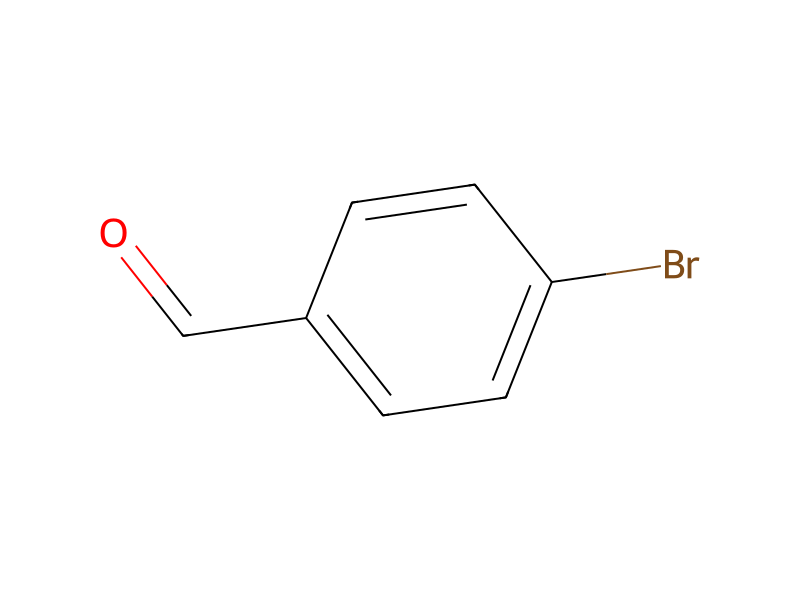

Produkt 1

Reagenzien, Katalysatoren, Lösungsmittel 1

Versuchsvorschrift
A solution of 38.0 g of (3-bromo-benzyl)-triphenylphosphonium bromide, known from the literature, in 250 ml of tetrahydrofuran was treated at -10° C. with 8.75 g of potassium tert.-butylate and stirred for 3 minutes. A solution of 14.8 g of 4-bromobenzaldehyde was added dropwise to the yellow-orange suspension within 15 minutes. After stirring for 60 minutes the reaction mixture was concentrated. The residue was treated with ice-water and extracted with ethyl acetate/ether. The organic phases were washed with water and saturated aqueous sodium chloride solution, dried over magnesium sulfate and evaporated. The residue was chromatographed over silica gel with hexane and hexane/ether 99:1 and gave (E)-3,4'-dibromostilbene as colourless crystals, MS: m/z 338 (M+), as well as (Z)-3,4'-dibromostilbene as a colourless oil, MS: m/z 338 (M+).
Aufarbeitung
- stirringAfter stirring for 60 minutes the reaction mixture
- concentrationwas concentrated
- additionThe residue was treated with ice-water
- extractionextracted with ethyl acetate/ether
- washThe organic phases were washed with water and saturated aqueous sodium chloride solution
- dry with materialdried over magnesium sulfate
- customevaporated
- customThe residue was chromatographed over silica gel with hexane and hexane/ether 99:1
Quellen und Nachweise
- ORD-Eintrag
- ord-43c67419202641e7ac61d74d2678cccb
- Quelldatensatz
- uspto-grants-1996_05
- Patentnummer
- US05521160
Notizen zur Reaktion
Wird geladen…