Cyanuric chloride → Tris-(2,4-dichloro-6-methyl-phenoxy)-s-triazine
Reaktionsgleichung

[Cl:1][C:2]1[CH:7]=[C:6]([Cl:8])[CH:5]=[C:4]([CH3:9])[C:3]=1[OH:10].[C:11]1(Cl)[N:16]=[C:15](Cl)[N:14]=[C:13](Cl)[N:12]=1>[OH-].[Na+].COCCO>[Cl:1][C:2]1[CH:7]=[C:6]([Cl:8])[CH:5]=[C:4]([CH3:9])[C:3]=1[O:10][C:11]1[N:16]=[C:15]([O:10][C:3]2[C:4]([CH3:9])=[CH:5][C:6]([Cl:8])=[CH:7][C:2]=2[Cl:1])[N:14]=[C:13]([O:10][C:3]2[C:4]([CH3:9])=[CH:5][C:6]([Cl:8])=[CH:7][C:2]=2[Cl:1])[N:12]=1Komponenten
5
Edukt 2
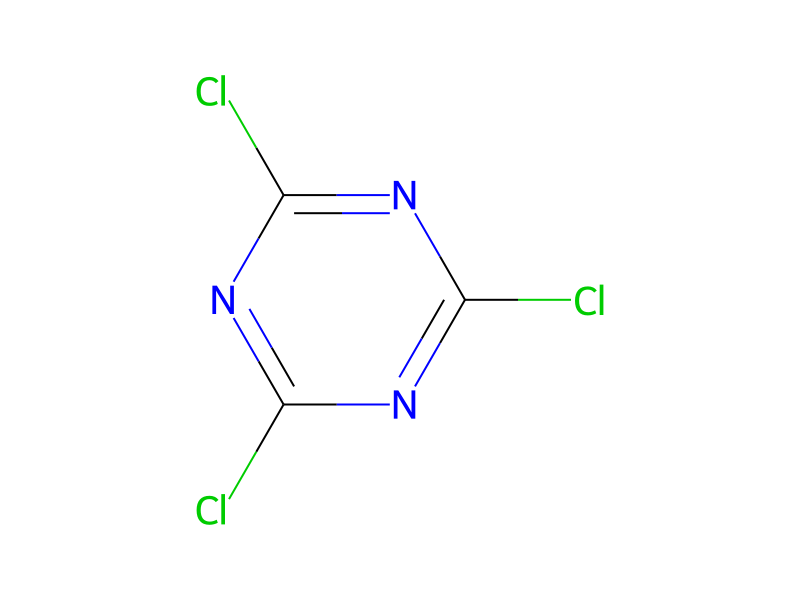

Produkt 1

Reagenzien, Katalysatoren, Lösungsmittel 2


Versuchsvorschrift
By the same procedure as in Example 1, 60 g of sodium hydroxide is dissolved at 70° C. in 1.8 liters of ethylene glycol monomethyl ether and, by the addition of 265.6 g (1.5 moles) of 2,4-dichloro-6-methylphenol, a phenolate solution is prepared into which 92 g (0.5 mole) of cyanuric acid chloride is stirred at 70° over a period of 3 minutes, causing the temperature of the reaction mixture to rise to 81° C. After half an hour of refluxing, the product is separated as in Example 1.
Aufarbeitung
- customto rise to 81° C
- temperatureAfter half an hour of refluxing
- customthe product is separated as in Example 1
Quellen und Nachweise
- ORD-Eintrag
- ord-1c7ca0a39c1b48779f0d06a2c387e273
- Quelldatensatz
- uspto-grants-1977_08
- Patentnummer
- US04039538
Notizen zur Reaktion
Wird geladen…