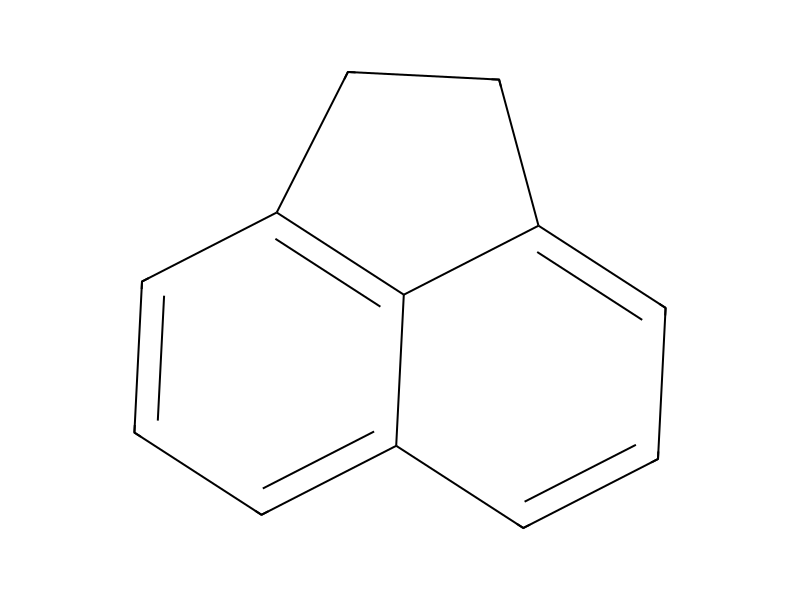
Acenaphthene → Acenaphthylene, dodecahydro-
Reaktionsgleichung

[CH2:1]1[C:11]2=[C:12]3[C:7](=[CH:8][CH:9]=[CH:10]2)[CH:6]=[CH:5][CH:4]=[C:3]3[CH2:2]1>CC1CCCCC1.[Pt]>[CH2:1]1[CH:11]2[CH:12]3[CH:7]([CH2:8][CH2:9][CH2:10]2)[CH2:6][CH2:5][CH2:4][CH:3]3[CH2:2]1Komponenten
4
Edukt 1
Produkt 1

Reagenzien, Katalysatoren, Lösungsmittel 2


Versuchsvorschrift
Acenaphthene is dissolved in methylcyclohexane and then hydrogenated at 475° F. and under a hydrogen pressure of 500 p.s.i.g. using a 1% platinum-on-alumina catalyst to form perhydroacenaphthene (C12H20). After removal of most of the methylcyclohexane by distillation, the perhydroacenaphthene containing 3.3% of residual methylcyclohexane is charged in amount of 520 g. to an autoclave provided with means for effecting agitation. 70 g. of anhydrous HF are added, 30 g. of BF3 are pressured into the autoclave and the mixture is heated to and maintained in the range of 60°-100° C. and mainly in the neighborhood of 95° C. for 6.3 hours while being agitated. The reaction is then stopped, and the hydrocarbon layer is separated from the catalyst layer and washed to remove residual catalyst. Analysis of the hydrocarbon produce by vapor phase chromatography gives the results shown in Table 2.