Reaktionsgleichung
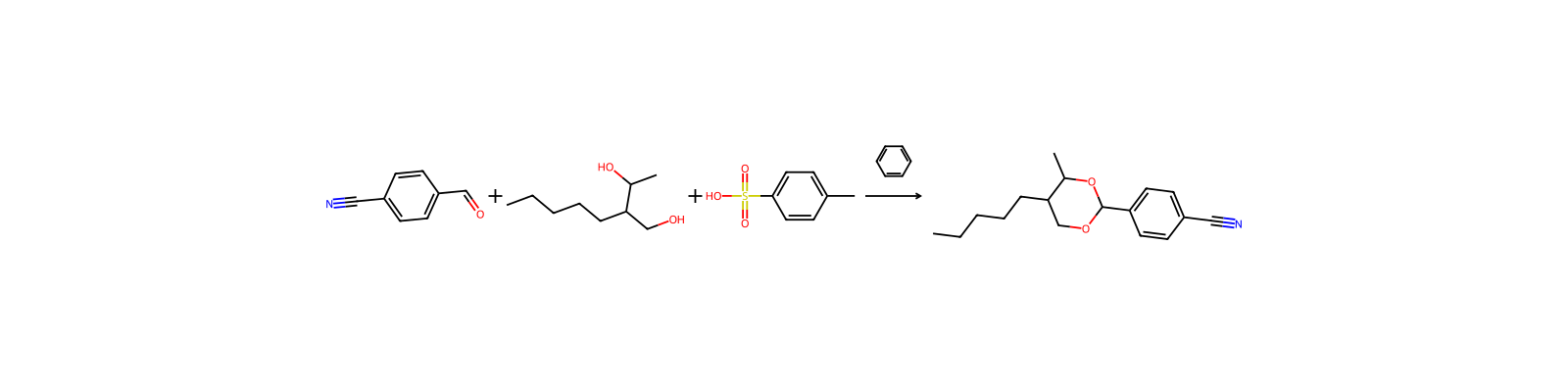
[C:1]([C:3]1[CH:10]=[CH:9][C:6]([CH:7]=[O:8])=[CH:5][CH:4]=1)#[N:2].O[CH2:12][CH:13]([CH2:17][CH2:18][CH2:19][CH2:20][CH3:21])[CH:14]([OH:16])[CH3:15].C1(C)C=CC(S(O)(=O)=O)=CC=1>C1C=CC=CC=1>[C:1]([C:3]1[CH:10]=[CH:9][C:6]([CH:7]2[O:16][CH:14]([CH3:15])[CH:13]([CH2:17][CH2:18][CH2:19][CH2:20][CH3:21])[CH2:12][O:8]2)=[CH:5][CH:4]=1)#[N:2]Komponenten
5
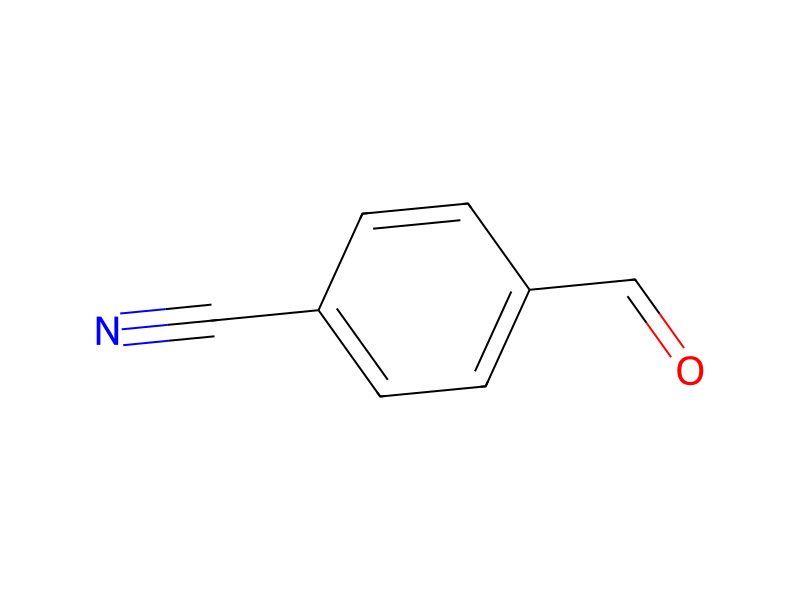
Edukt 3


Produkt 1

Reagenzien, Katalysatoren, Lösungsmittel 1

Versuchsvorschrift
A mixture of 0.1 mol of p-cyanobenzaldehyde, 0.1 mol of 3-hydroxymethyl-2-octanol, 200 ml of benzene and 150 mg of p-toluenesulfonic acid is boiled under a water separator until the reaction is complete. Usual working-up gives 2-p-cyanophenyl-5-n-pentyl-4-methyl-1,3-dioxane.
Quellen und Nachweise
- ORD-Eintrag
- ord-f338593bb42141e5a94468c5d011ca54
- Quelldatensatz
- uspto-grants-1988_02
- Patentnummer
- US04726911
Verknüpfte Notizen
Wird geladen…