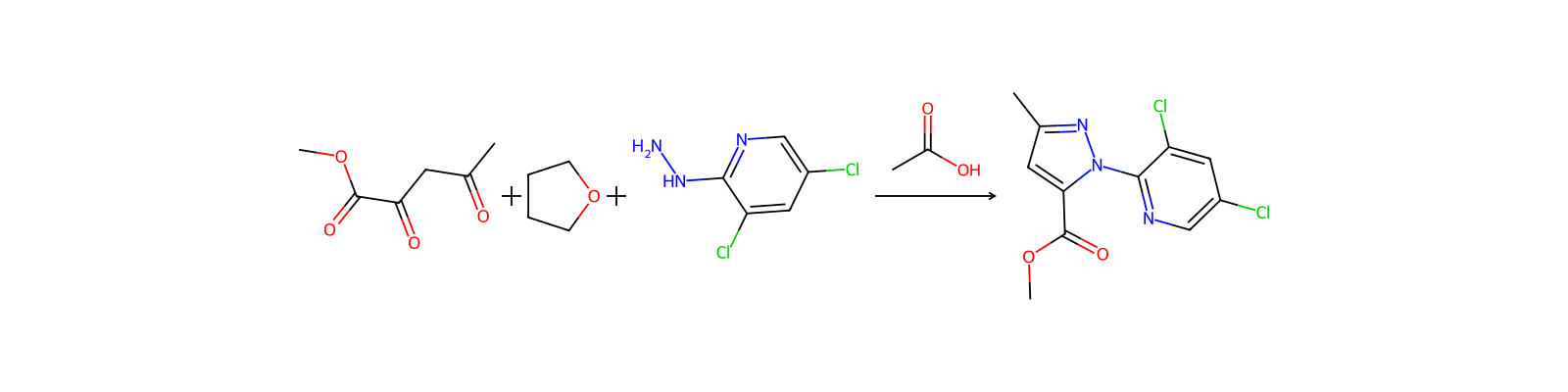
To a 100 mL flask, methyl 2,4-dioxopentanoate (2.88 g, 0.020 mol), tetrahydrofuran (15 mL), acetic acid (30 mL), and 3,5-dichloro-2-hydrazinylpyridine (3.56 g, 0.020 mol) were added sequentially. The reaction mixture was heated to reflux for 2 hours and then the mixture was concentrated by rotary evaporator. Then ethyl acetate (150 mL) and water (100 mL) was added, the organic layer was washed with saturated sodium bicarbonate solution (100 mL) and saturated brine (100 mL), dried over anhydrous magnesium sulfate and concentrated by rotary evaporator. The residue was purified by silica gel column chromatography (Fluent: ethyl acetate/petroleum ether=1/5) to give the product (2.9 g) as a white solid in 50% yield. Melting point: 97-98° C. 1H NMR (300 MHz, CDCl3): 8.432 (d, 1H), 7.888 (d, 1H), 6.802 (s, 1H), 3.760 (s, 3H), 2.370 (s, 3H).