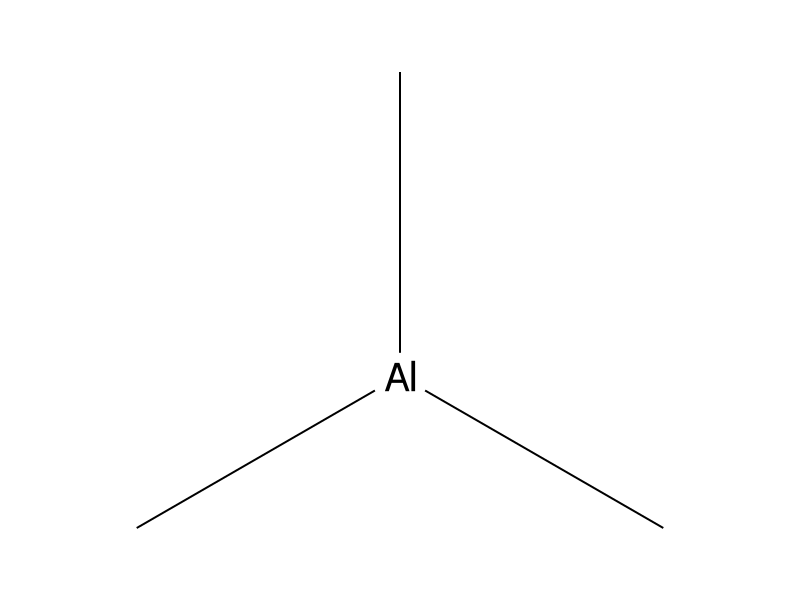
To a pressure vessel, a degassed solution of 2,6-dichloro-3-nitro-pyridin-4-ylamine (3.0 g, 14.4 mmol) (R. J. Rousseau and R. K. Robins J. Heterocyclic Chem. 2, 1965, 196) and tetrakis(triphenylphosphine)palladium(0) (1.67 g, 1.44 mmol) in DMF (45 mL) was stirred at room temperature. To this mixture was added dropwise a solution of trimethylaluminium (7.93 mL, 15.8 mmol, 2M in toluene). The resulting mixture was sealed and heated at 70° C. for 3 hours. The reaction mixture was poured into ice/water (800 mL). The organic material was extracted with EtOAc (5×200 mL). The combined organic layers were dried (MgSO4) and concentrated in vacuo. The crude material was purified on silica gel dry column using EtOAc:Hexane gradient (1:9) to (3:7) to afford the desired compound as a yellow solid (1.20 g, 45%), HPLC: 99% (220 nm), LCMS (+ESI, M+H+) m/z 188, IR (KBr, cm−1) 3431, 3310, 3172, 1653, 1506, 1264; 1H NMR (400 MHz, CDCl3) δ 7.19 (s, 1H), 6.57 (br s, 2H), 2.63 (s, 3H).