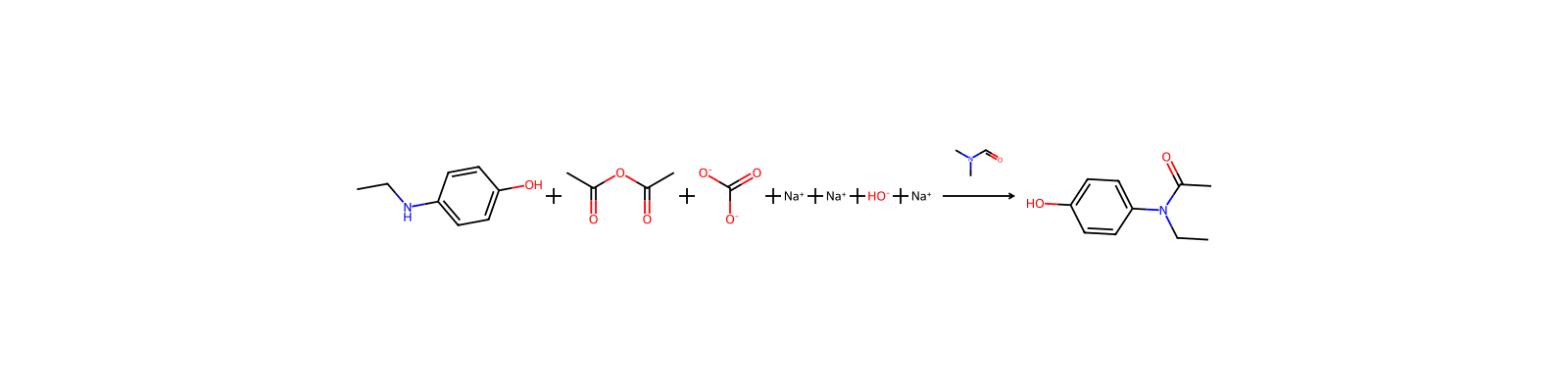
Two g of p-ethylaminophenol (0.0146 moles) were dissolved in 50 ml DMF. To this was added 2.98 g of acetic anhydride (0.0292 moles). The mixture was heated at 60° for three hours and then poured over crushed ice. Sodium carbonate was added until a pH of approximately 10 was achieved. The solution and precipitated oil were extracted with chloroform, dried over anhydrous magnesium sulfate, and then evaporated to dryness leaving a residual oil. To this oil was added 5% sodium hydroxide, and the mixture was heated at 60° for one hour. The solution was cooled and then extracted with chloroform. The remaining aqueous phase was acidified with dilute HCl to achieve a pH of approximately 4, and then extracted with chloroform. The liquid was dried over anhydrous magnesium sulfate, and then evaporated to dryness. The residual brown solid material was recrystallized from an ethanol-water mixture to yield N-ethyl-4'-hydroxyacetanilide (melting point 183°-185° C.).