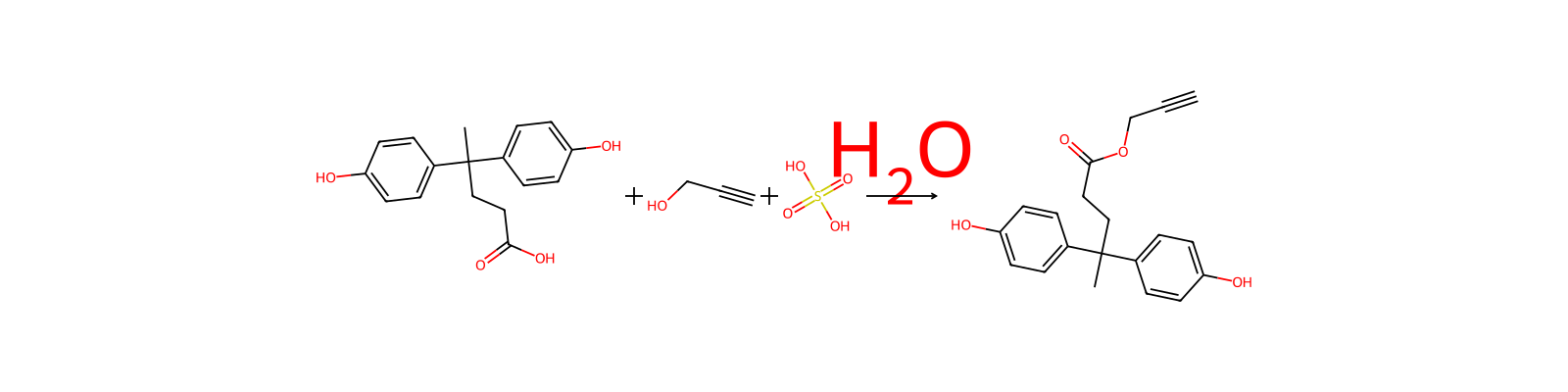
[OH:1][C:2]1[CH:7]=[CH:6][C:5]([C:8]([C:15]2[CH:20]=[CH:19][C:18]([OH:21])=[CH:17][CH:16]=2)([CH3:14])[CH2:9][CH2:10][C:11]([OH:13])=[O:12])=[CH:4][CH:3]=1.[CH2:22](O)[C:23]#[CH:24].S(=O)(=O)(O)O>O>[CH2:24]([O:12][C:11](=[O:13])[CH2:10][CH2:9][C:8]([C:15]1[CH:16]=[CH:17][C:18]([OH:21])=[CH:19][CH:20]=1)([C:5]1[CH:4]=[CH:3][C:2]([OH:1])=[CH:7][CH:6]=1)[CH3:14])[C:23]#[CH:22]A mixture of 21.2 grams of 4,4-bis(4-hydroxyphenyl)pentanoic acid, 50 ml. of propargyl alcohol and 0.3 ml. of concentrated sulfuric acid was stirred at room temperature for 40 hours. The mixture was then poured into 500 ml. of water, with stirring. The oily layer was allowed to settle and the aqueous layer was removed by decantation. The oily layer was washed with water two additional times. Finally, 500 ml. of water containing 10 grams of sodium bicarbonate was added to the oily layer, the product was extracted from the mixture into ether and chromatographed on a silica column (using 10/90 acetone/toluene, by volume, eluent) to give 96.9 grams (41%) of white solid, m.p. 99.5°-101.0° C.