Reaktionsgleichung

[IH:1].[C:2]1([CH:8]([C:14]2[CH:19]=[CH:18][CH:17]=[CH:16][CH:15]=2)[NH:9][C:10](=[NH:13])SC)[CH:7]=[CH:6][CH:5]=[CH:4][CH:3]=1.[NH2:20][CH2:21][CH2:22][CH2:23]N>ClC1C=CC=CC=1Cl>[IH:1].[C:2]1([CH:8]([NH:9][C:10]2[NH:20][CH2:21][CH2:22][CH2:23][N:13]=2)[C:14]2[CH:19]=[CH:18][CH:17]=[CH:16][CH:15]=2)[CH:7]=[CH:6][CH:5]=[CH:4][CH:3]=1Komponenten
Edukt 2

Produkt 1

Reagenzien, Katalysatoren, Lösungsmittel 1

Versuchsvorschrift
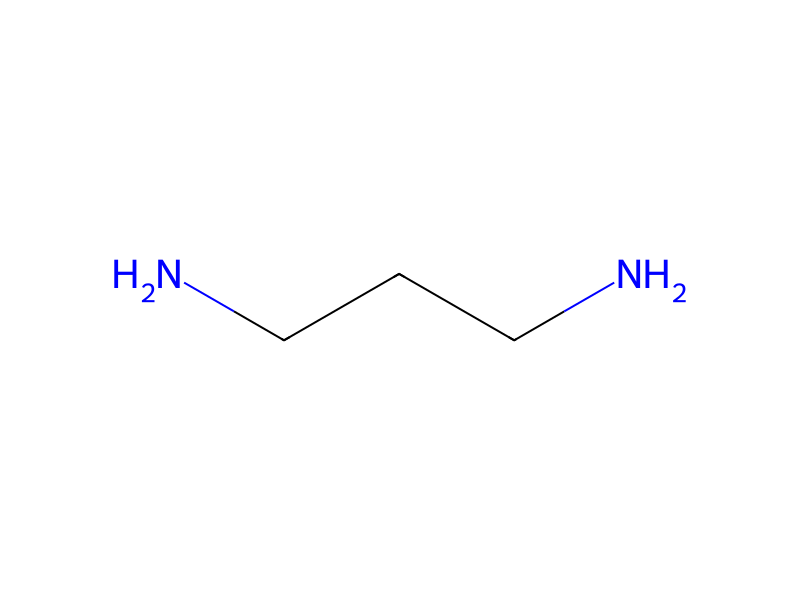
To 38.43 grams (0.10 mole) of 1-diphenylmethyl-2-methyl-2-thiopseudourea hydroiodide in 25 milliliters of o-dichlorobenzene was added 7.41 grams (0.10 mole) of 1,3-diaminopropane, and the mixture heated (below reflux temperature) for four hours with stirring; then the temperature was increased to reflux temperature and maintained under reflux for 12 hours. The mixture was allowed to cool to room temperature, the solvent decanted off and the residue dissolved in methanol. The methanol solution was concentrated while simultaneously adding isopropanol to obtain 24.6 grams (62.6 percent yield) of 2-diphenylmethylamino-1,4,5,6-tetrahydropyrimidine hydroiodide product, m.p. (185° C.) 197°-200° C. After two recrystallizations from methanol-isopropanol, a purified product of melting point 207°-209° C. was obtained.
Aufarbeitung
- temperaturethe mixture heated
- temperature(below reflux temperature) for four hours
- temperaturethen the temperature was increased
- temperatureto reflux temperature
- temperaturemaintained
- temperatureunder reflux for 12 hours
- customthe solvent decanted off
- dissolutionthe residue dissolved in methanol
- concentrationThe methanol solution was concentrated while simultaneously adding isopropanol
Quellen und Nachweise
- ORD-Eintrag
- ord-5efb8ff247b54fbc8df6179cc291bc73
- Quelldatensatz
- uspto-grants-1979_11
- Patentnummer
- US04174401
Verknüpfte Notizen
Wird geladen…