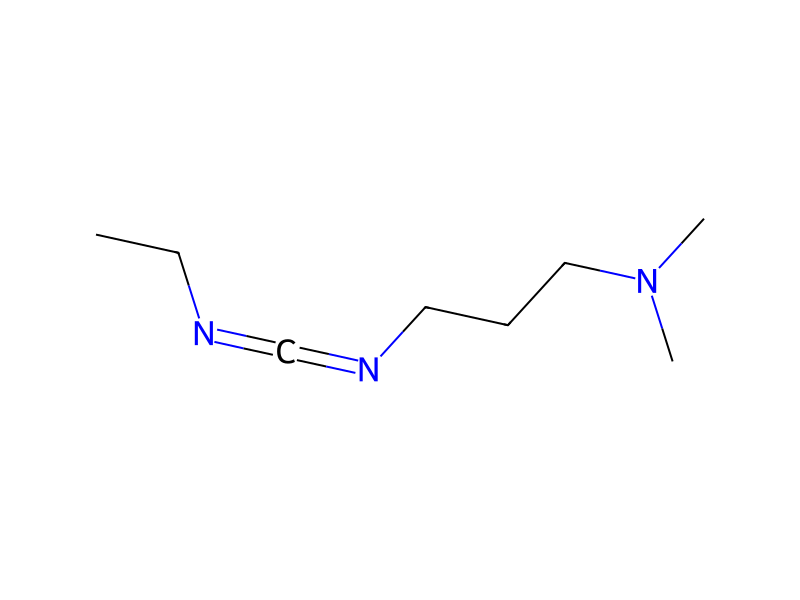
[OH:1][C:2]1[CH:7]=[CH:6][C:5]([CH:8]([C:12]2[CH:17]=[CH:16][C:15]([OH:18])=[CH:14][CH:13]=2)[C:9]([OH:11])=O)=[CH:4][CH:3]=1.CN(C)CCCN=C=NCC.Cl.C[O:32][C:33](=[O:36])[CH2:34][NH2:35].CN1CCOCC1>C(Cl)Cl.C(OCC)(=O)C.Cl.N1C=CC=CC=1.C1COCC1>[C:33]([CH2:34][NH:35][C:9](=[O:11])[CH:8]([C:5]1[CH:4]=[CH:3][C:2]([OH:1])=[CH:7][CH:6]=1)[C:12]1[CH:17]=[CH:16][C:15]([OH:18])=[CH:14][CH:13]=1)([OH:36])=[O:32]To a stirred solution in CH2Cl2 (0.5 mL), THF (20 mL), and pyridine (20 mL) of 2,2-bis(4-hydroxyphenyl)acetic acid (0.94 g, 3.85 mmol), prepared as in Example 31, was added 1-(3-dimethylaminopropyl)-3-ethylcarbodiimide (1.10 g, 5.76 mmol), glycine methyl ester hydrochloride (0.723 g, 5.76 mmol), and N-methylmorpholine (0.63 mL, 5,76 mmol) and the mixture was stirred overnight at room temperature. The reaction mixture was then diluted with ethyl acetate and aqueous 0.5 N HCl. The organic layer was washed with 0.5 N HCl (3X), saturated aqueous NaHCO3 (3X), and brine, dried over MgSO4, filtered, and concentrated in vacuo. The residue was dried to constant weight on high vacuum to give 1.05 g (87%) of 2,2-bis(4-hydroxyphenyl)acetic acid-N-carboxymethyl amide.