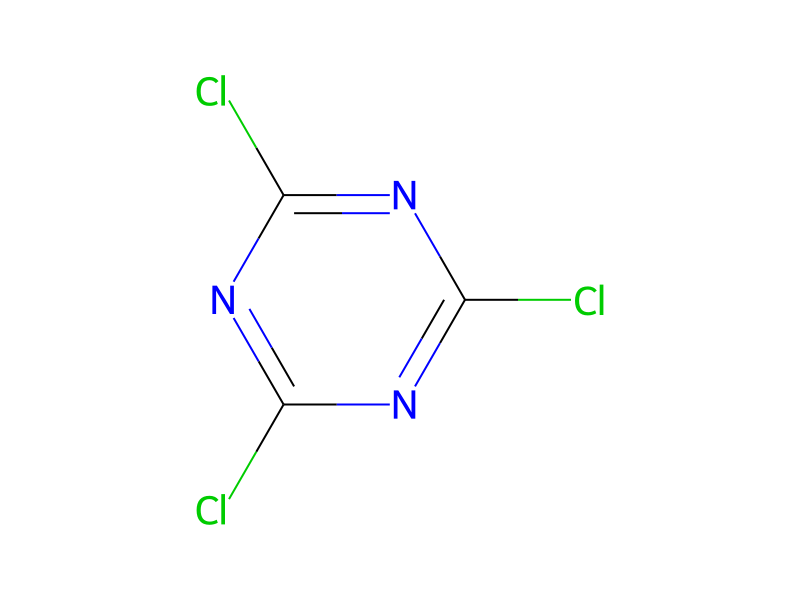
Cyanuric chloride → 2,4-bis[N,N-bis(2,2,6,6-tetramethyl-4-piperidyl)amino]-6-chloro-1,3,5-triazine
HRID 484944
Reaktionsgleichung

[N:1]1[C:8](Cl)=[N:7][C:5](Cl)=[N:4][C:2]=1[Cl:3].[CH3:10][C:11]1([CH3:30])[CH2:16][CH:15]([NH:17][CH:18]2[CH2:23][C:22]([CH3:25])([CH3:24])[NH:21][C:20]([CH3:27])([CH3:26])[CH2:19]2)[CH2:14][C:13]([CH3:29])([CH3:28])[NH:12]1>O>[Cl:3][C:2]1[N:1]=[C:8]([N:17]([CH:18]2[CH2:23][C:22]([CH3:25])([CH3:24])[NH:21][C:20]([CH3:27])([CH3:26])[CH2:19]2)[CH:15]2[CH2:16][C:11]([CH3:30])([CH3:10])[NH:12][C:13]([CH3:29])([CH3:28])[CH2:14]2)[N:7]=[C:5]([N:17]([CH:15]2[CH2:14][C:13]([CH3:29])([CH3:28])[NH:12][C:11]([CH3:30])([CH3:10])[CH2:16]2)[CH:18]2[CH2:23][C:22]([CH3:25])([CH3:24])[NH:21][C:20]([CH3:26])([CH3:27])[CH2:19]2)[N:4]=1Komponenten
4
Edukt 2

Produkt 1

Reagenzien, Katalysatoren, Lösungsmittel 1

Versuchsvorschrift
Following the procedure described in Preparation 11(b), cyanuric chloride was reacted with bis(2,2,6,6-tetramethyl-4-piperidyl)amine [prepared as described in Preparation 12(a)]. After completion of the reaction, the reaction mixture was poured into water and extracted with chloroform. The extract was dried over anhydrous potassium carbonate and then the chloroform was distilled off. The residue was recrystallized from chloroform, to afford the desired product, in the form of crystals melting at 295° C. (with decomposition).